Source-led article
Signal President Meredith Whittaker Warns Against Treating AI Chatbots as Trusted Companions
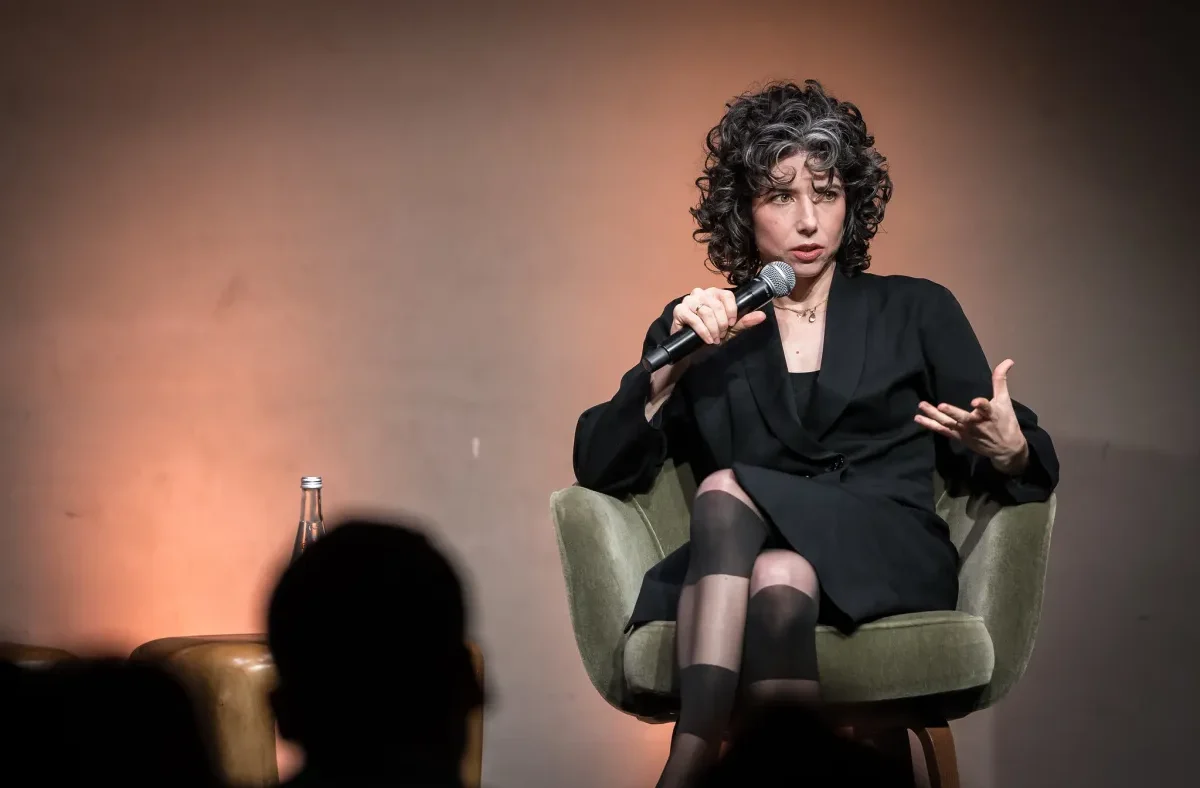

Signal President Meredith Whittaker has issued a stark warning regarding the privacy implications of AI chatbots, advising users that these systems should not be treated as trusted friends or sentient beings. Her comments, made during a broader interview with Bloomberg, underscore growing concerns about data security and personal autonomy in the age of advanced artificial intelligence.
Whittaker’s direct statement, “These are not your friends. These are not conscious beings. These are not sentient interlocutors,” aimed to reframe public perception of AI tools like ChatGPT and Claude. She emphasized that despite their sophisticated conversational abilities, these chatbots are fundamentally data-processing systems and not entities capable of genuine companionship or understanding.
Personal Use and Data Averaging
While acknowledging her own limited use of AI tools for basic tasks like document formatting, Whittaker drew a firm line at engaging them for intellectual or creative processes. She stated, “I don’t ask them questions. I’m very serious about my thinking and writing, and I don’t want the process of working through an idea […] to be foreclosed or eclipsed by the response of a system that’s averaging what’s already out there.” This perspective highlights a concern that over-reliance on AI for complex thought could stifle original thinking and introduce biases derived from aggregated online data.
This cautious approach from a leading voice in privacy advocacy resonates particularly in India, where the rapid adoption of AI tools across various sectors brings both innovation and inherent risks regarding data handling and digital sovereignty. Users and businesses in India are increasingly leveraging AI for diverse applications, making awareness of these privacy concerns crucial.
The “Pervasive Access” Scenario
Whittaker also critically addressed predictions from figures like Microsoft AI CEO Mustafa Suleyman, who envisioned AI copilots managing personal tasks such as Christmas shopping. She outlined a scenario where such a system would require “access to my credit card, my browser, my Signal, the ability to message my siblings on my behalf, my home address [and] my calendar.”
She characterized this level of integration as a system with “very pervasive access across multiple applications and services,” amounting to a “kind of a backdoor” from Signal’s perspective. This illustrates the potential for AI to become deeply embedded in personal digital lives, gathering vast amounts of sensitive information that could be vulnerable to misuse or breaches.
Key facts:
| Feature | Detail |
|---|---|
| Source | Signal President Meredith Whittaker |
| Core Message | AI chatbots are not friends; they lack consciousness and sentience. |
| Primary Concern | Pervasive data access and privacy implications of AI integration. |
| Personal AI Use | Whittaker uses AI for formatting but avoids it for serious thinking/writing. |
Implications for Indian Users and Businesses
For Indian users and businesses, Whittaker’s warning serves as an important reminder about digital hygiene and data governance when interacting with AI technologies. As India pushes forward with its AI mission, including initiatives like the IndiaAI Mission, the balance between innovation and privacy protection becomes paramount. Companies deploying AI solutions, especially those handling sensitive customer data, must prioritize robust security measures and transparent data policies. Individual users should also exercise caution, understanding the extent of data they share with AI services and the potential implications of such widespread access.
Source: TechCrunch AI – https://techcrunch.com/2026/06/20/signals-meredith-whittaker-wants-you-to-remember-that-ai-chatbots-are-not-your-friends/