
Source-led article
Unconventional AI Aims to Cut AI Power Consumption by 1,000x with New Architecture
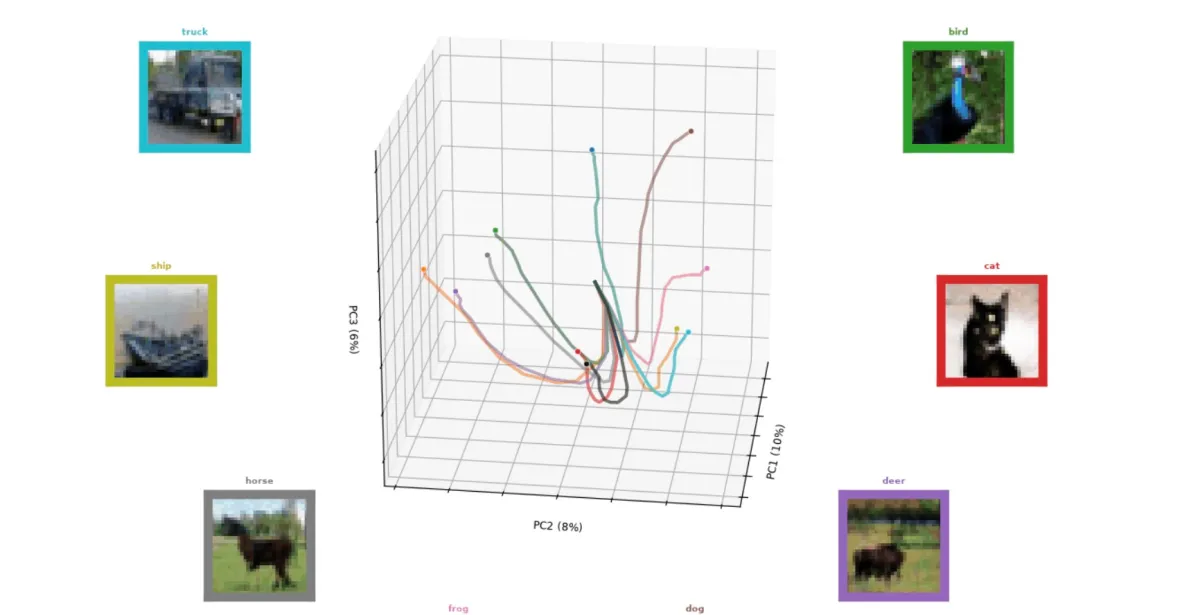
A new venture, Unconventional AI, founded by Naveen Rao, the former head of AI at Databricks, is developing a computing architecture that aims to reduce the power consumption of AI inference processing by as much as 1,000 times. The company recently unveiled its first model, Un-0, an image-generation system designed to demonstrate the capabilities of its novel oscillator-based architecture.
The introduction of Un-0 marks a significant step, as it is the first public demonstration of how Unconventional AI’s technology can replicate conventional AI systems. The model, detailed in an accompanying research paper, operates on a software simulation of the new architecture and is reported to perform comparably to state-of-the-art diffusion models in image generation.
Novel Computing Architecture
The core innovation lies in Unconventional AI’s oscillator-based computing architecture, which fundamentally differs from the traditional chip designs powering most conventional computing and large language models (LLMs). This new approach is intended to address one of the most pressing challenges in the scaling of artificial intelligence: energy consumption.
Naveen Rao emphasized that the Un-0 model serves as a “hello world” for this new type of computer. He anticipates more developments from the company over the coming year as they progress from software simulations to physical hardware.
Key facts
| Feature | Description |
|---|---|
| Company | Unconventional AI |
| Founder/CEO | Naveen Rao (former Databricks AI chief) |
| Core Innovation | Oscillator-based computing architecture |
| Initial Product | Un-0 (image-generation system) |
| Projected Impact | 1,000x reduction in AI inference power consumption |
Addressing AI’s Energy Challenge
The rapid expansion of AI applications and models has led to a corresponding surge in energy demand. Industry experts and researchers frequently cite power availability as a potential bottleneck for future AI growth. Unconventional AI’s ambitious goal directly tackles this issue, proposing a solution that could fundamentally alter the economics and environmental impact of large-scale AI deployment.
While the current Un-0 model runs on a simulated environment, Unconventional AI plans to release schematics for an actual chip soon. The long-term vision involves building an entire inference stack from the ground up, with the company eventually providing compute capacity similar to existing providers but at vastly reduced power levels.
Implications for India’s AI Landscape
For the Indian tech and startup ecosystem, where digital transformation and AI adoption are high priorities, advancements in energy-efficient AI hardware could have a substantial impact. Reduced operational costs due to lower power consumption could make advanced AI more accessible for startups, research institutions, and various industries across the country. This aligns with national initiatives focused on sustainable technology development and digital infrastructure. The ability to run powerful AI models with less energy could also bolster India’s position in the global AI race by mitigating infrastructure limitations.
Source: TechCrunch AI – https://techcrunch.com/2026/06/25/databricks-former-ai-chief-thinks-he-can-cut-ais-power-bill-by-1000x/