Source-led article
AI Leaders Fund $1 Billion Initiative to Retrain US Workforce for AI Economy
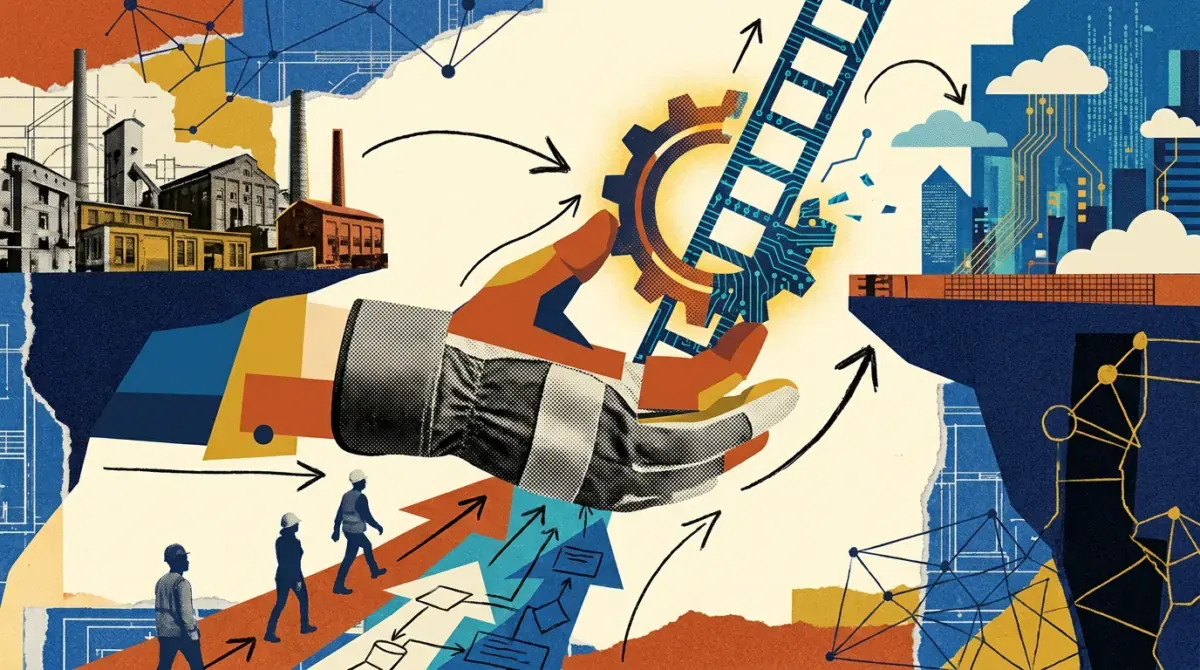
A new bipartisan nonprofit, “Raise Us,” has been launched with the ambitious goal of raising $1 billion to prepare the American workforce for the economic transformation driven by artificial intelligence. Notably, leading AI developers such as Amazon, Anthropic, Microsoft, and the OpenAI Foundation are among the primary funders of this initiative. Former US Commerce Secretary Gina Raimondo will lead Raise Us as CEO, alongside former Indiana Governor Eric Holcomb.
The initiative comes at a time when the US is heavily investing in AI infrastructure and models, yet a comprehensive strategy for its human capital remains underdeveloped. Raimondo emphasized this point at the launch, stating, “America has a technology strategy for leading the global AI competition. It does not yet have a people strategy—and we cannot lead without one.”
Key facts about Raise Us
| Aspect | Details |
|---|---|
| Goal | Raise $1 billion to prepare American workers for an AI-driven economy. |
| Founders | Former US Commerce Secretary Gina Raimondo (CEO) and former Indiana Governor Eric Holcomb. |
| Key Funders | Amazon, Anthropic, Microsoft, OpenAI Foundation, Bank of America (lead sponsor for apprenticeships), ADP, AMD, Autodesk, Blackstone, Cisco, Cognizant, Deloitte, Eli Lilly, General Motors, IBM, Mastercard, ServiceNow, UPS, Workday, plus philanthropic foundations. |
| Initial Focus | Pilot programs in Arkansas, Connecticut, Maryland, and Utah, focusing on career navigation, expanding service year programs, and exploring “wage insurance” for those transitioning to lower-paying roles. |
| Structure | Organized into four areas: State Partnerships, Employer Coalition, Education and Training, and a Policy Lab (explicitly not corporate-funded). |
| Funding Status | $500 million in multi-year pledges already secured, with a target of $1 billion. |
Funding from AI Industry Leaders
What makes Raise Us particularly notable is the direct involvement and financial backing from the very companies at the forefront of AI development. This marks the first instance where major AI developers have collectively funded an independent initiative to address workforce transitions. While the support from these companies is crucial for the scale of the program, it also raises questions about the initiative’s independence, given that these firms stand to profit from the widespread adoption of AI.
The organization plans to secure $1 billion in multi-year pledges, with $500 million reportedly already locked in. Bank of America is a lead sponsor, specifically supporting an apprenticeship program for advanced manufacturing. Other significant corporate backers include ADP, IBM, Mastercard, and Deloitte, alongside philanthropic organizations like the Rockefeller Foundation.
Strategic Focus Areas
Raise Us outlines four core areas of operation to achieve its objectives:
State Partnerships: This pillar aims to align state education and workforce development programs more closely with employer demand. The focus will be on outcomes, such as whether participants secure jobs, rather than just enrollment numbers. Initial partnerships are bipartisan, involving Arkansas, Connecticut, Maryland, and Utah. For example, Arkansas LAUNCH, an AI-powered career navigation platform, will connect students and job seekers with personalized learning paths.
Employer Coalition: This involves bringing together companies utilizing AI to collectively develop pilot programs for retraining and retaining their workforces. Microsoft has already experimented with models where entry-level legal staff are cross-trained in AI skills, allowing them to adapt to evolving roles.
Education and Training: This area focuses on scaling AI-powered training models that integrate hands-on experience with credentials, offering more affordable alternatives to traditional higher education.
Policy Lab: This component is dedicated to developing and testing new policy approaches. Significantly, the Policy Lab’s funding is explicitly separate from corporate contributions to ensure unbiased recommendations.
Challenges and Outlook
The success of Raise Us will be measured by its ability to help workers secure and maintain stable, well-paying jobs in an AI-transformed economy. Past workforce retraining efforts in the US have had a mixed track record, with Raimondo herself acknowledging their occasional ineffectiveness. The initiative seeks to overcome these challenges by focusing on innovative models, such as “wage insurance” for workers who transition to lower-paying roles to avoid leaving the workforce entirely, as explored in some pilot states.
While the program addresses a critical societal need, the broader impact of AI on the workforce remains an ongoing debate. Research continues to evaluate how swiftly and profoundly AI will reshape job markets. Raise Us positions itself as a proactive measure to ensure that as AI advances, the American workforce is not left behind.
Source: The Decoder – https://the-decoder.com/the-companies-most-likely-to-automate-your-job-are-now-funding-a-1-billion-program-to-retrain-you/