
Source-led article
DP World Backs Maithri Aquatech, Signalling Maturing Indian Climate Tech Investment
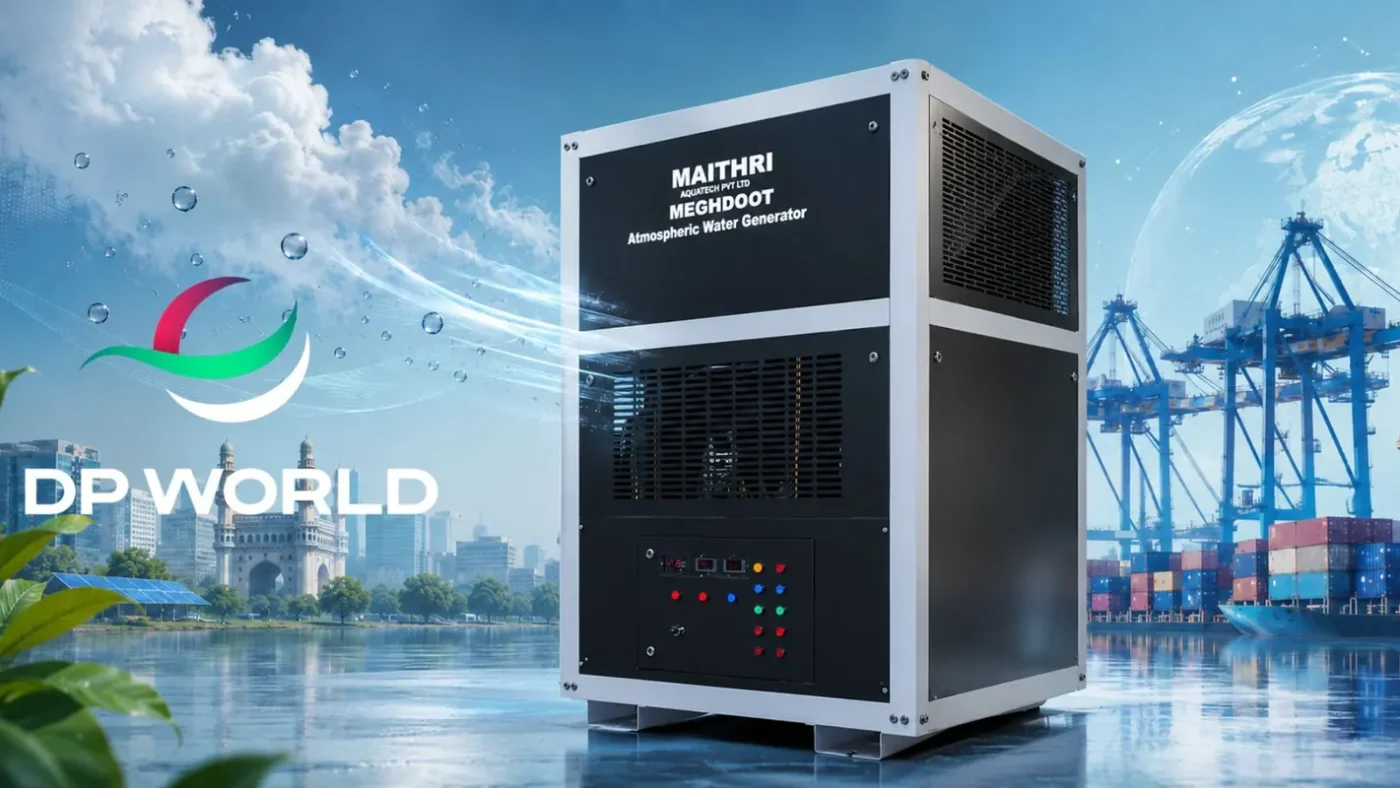
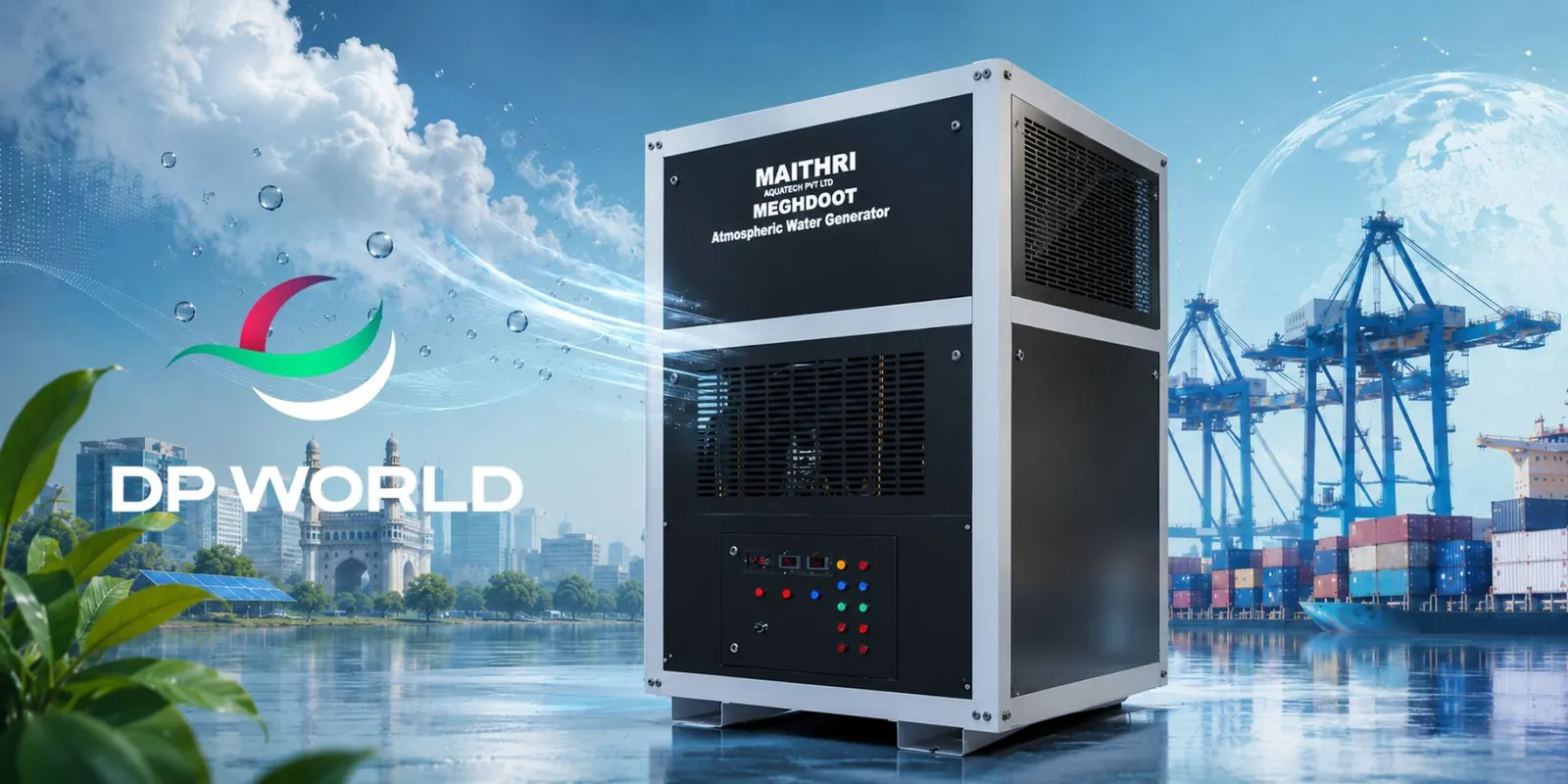
Maithri Aquatech, a Hyderabad-based climate technology startup, has secured a strategic 14% stake from global ports and logistics major DP World. The investment, though undisclosed in value, underscores a significant shift in the Indian climate tech landscape, attracting long-term strategic capital from large corporates rather than solely relying on traditional venture funding. Maithri Aquatech is recognized for its “Meghdoot” technology, which efficiently produces clean drinking water by extracting moisture from the air.
This backing from DP World is seen as a strong validation for Indian climate tech founders, offering not just capital but also a potential global deployment network and enhanced credibility for future investments. The logistics giant’s move to acquire equity, rather than simply purchasing the technology, signals a long-term commitment to water-from-air solutions as critical infrastructure.
Strategic Investment in Climate Solutions
DP World’s investment aligns with its ambitious environmental goals, specifically aiming for a net positive water impact by 2030. Integrating Maithri Aquatech’s atmospheric water generation systems could provide a sustainable solution for freshwater needs at DP World’s water-scarce port and logistics sites globally. This approach eliminates reliance on conventional water sources or energy-intensive desalination, offering a robust, on-site water generation capability.
Key facts:
| Company | Maithri Aquatech |
|---|---|
| Technology | Meghdoot (atmospheric water generation) |
| Investor | DP World |
| Stake acquired | 14% |
| Founder/MD | Ramkrishna Mukkavilli |
| Water generated to date | Over 5 billion litres |
| Groundwater saved | Around 15 billion litres |
| FY25 Revenue | Rs 15.2 crore |
Meghdoot Technology and Its Impact
Founded in 2016 by Ramkrishna Mukkavilli, Maithri Aquatech developed Meghdoot, meaning “messenger of the clouds” in Sanskrit, in collaboration with the CSIR-Indian Institute of Chemical Technology in Hyderabad. The system operates by drawing in ambient air, condensing its moisture, and then purifying the water through a multi-stage filtration and remineralisation process. This method entirely bypasses the need for groundwater or surface water and, unlike desalination, produces no brackish wastewater.
Maithri Aquatech asserts that its systems have collectively generated over 5 billion litres of water, saving approximately 15 billion litres of groundwater. Their technology is currently deployed across various critical applications, including with the Indian Railways, on ONGC offshore oil rigs, and in state government schools, demonstrating its versatility and reliability in diverse operational environments.
Addressing Funding Gaps in Indian Climate Tech
The Indian climate tech sector has experienced rapid growth, with annual investments rising from approximately $315 million in 2020 to $2.6 billion in 2025, according to Tracxn’s India Climate Tech 2026 report. However, a significant challenge remains in later-stage funding, as highlighted by a report from IIMA Ventures and Japan’s MUFG Bank, which found that fewer than 3% of Indian climate tech startups reach Series B funding or beyond.
DP World’s direct equity stake in Maithri Aquatech is crucial for bridging this gap. It provides not only capital but also a built-in customer, a global deployment network, and the credibility needed to attract further investment. This strategic partnership model could pave the way for other Indian climate startups to secure serious strategic capital from international majors, supporting the country’s most capital-intensive innovations.
How Atmospheric Water Generation Works
Atmospheric water generation is based on principles similar to those found in everyday dehumidifiers or air conditioners. The technology deliberately cools air to a dew point, causing water vapor to condense into liquid. This raw water then undergoes filtration to remove impurities like dust, microbes, and odors. Finally, essential minerals are added back to ensure the water is safe and palatable for drinking. The efficiency of these systems is particularly high in warm, humid conditions, making them exceptionally well-suited for coastal regions in India and other similar climates globally.
For Coruja readers, this development signifies the increasing viability and investment appeal of sustainable technologies emerging from India. It highlights how Indian innovation in climate tech is attracting global strategic partners, creating opportunities for technological advancements that address critical resource challenges like water scarcity, which is relevant for business continuity and sustainable operations across various industries.