
Source-led article
Anthropic CEO clarifies stance on open-weight models: no ban, but warns of Chinese AI risks
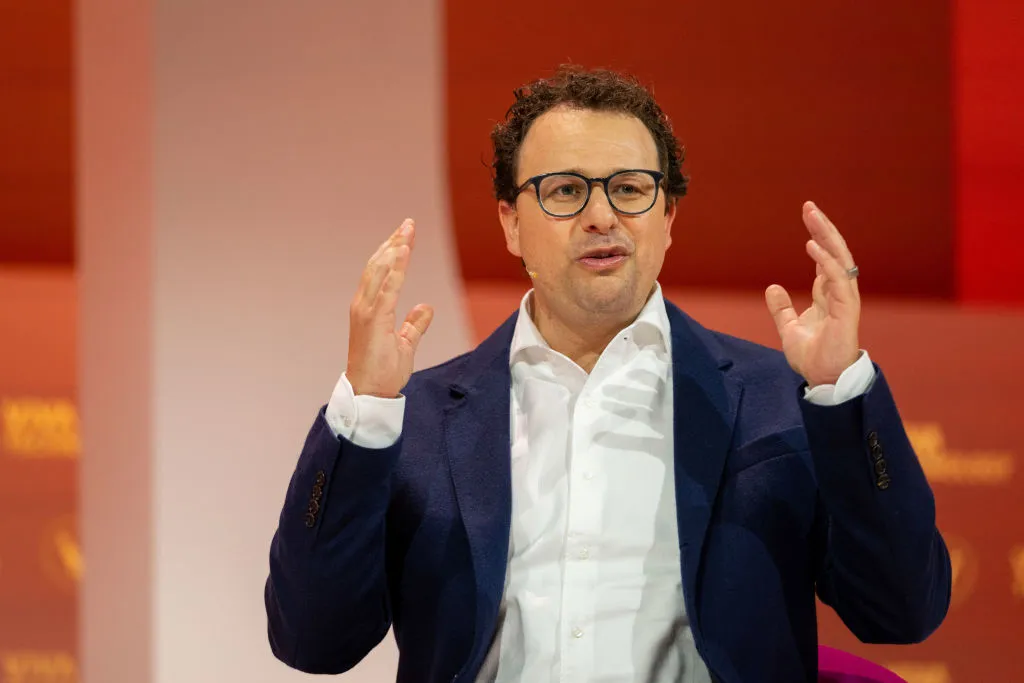
By Coruja Tech Desk
Anthropic founder and CEO Dario Amodei has publicly clarified that his company has never advocated for a ban on open-weight AI models, pushing back against industry speculation that the firm supports US government efforts to restrict Chinese models. In a blog post published on Monday, Amodei sought to separate the open-weight debate from what he sees as a more serious threat: China’s growing ability to build powerful AI for authoritarian purposes.
The clarification comes after Nvidia CEO Jensen Huang used his first post on X to share an open letter, signed by Meta, Hugging Face, Microsoft, Mistral, and Nvidia, urging policymakers not to impose “premature restrictions” on open-weight AI models. While the letter did not name China, it added fuel to a heated debate about whether the US should limit access to Chinese AI models, particularly those accused of using distillation to copy American technology.
Amodei’s post is significant for the Indian AI ecosystem, where open-weight models from Meta, Mistral, and others are widely used by startups, developers, and researchers. Any future US restriction on Chinese models could affect the availability of alternatives like DeepSeek, which many Indian teams rely on for cost-effective inference.
Amodei’s position on open-weight models
“Anyone who has read my past writing should know that I don’t regard such bans as a useful measure, but let me state it clearly so that there is no doubt: Anthropic has never advocated for a ban on open-weights models,” Amodei wrote, emphasising the words himself.
He distinguished between open-weight models with and without dangerous capabilities. “Open-weights models that don’t have dangerous capabilities are a public good: they don’t cost anything besides the compute needed to run them, and they provide value to businesses, developers, and researchers.” This framing suggests that Anthropic supports the current open-weight ecosystem, as long as the models do not cross a threshold of harm.
For Indian developers building on top of open models, this is a reassuring signal that one of the leading AI safety labs does not view the open-weight paradigm itself as a threat.
The real worry: China and authoritarian AI
Amodei said his fears are not about businesses using open-weight models, even those from China. Instead, he warned that “authoritarian governments” could build AI far more powerful than what the US currently possesses, achieving “permanent military superiority” and using AI to repress their own people. He singled out the Chinese Communist Party as the “most capable” among such governments.
He also raised concerns about AI enabling biological attacks, not just cybersecurity threats. In his view, open-weight models are more dangerous in those scenarios because guardrails are harder to apply and usage cannot be monitored once released. Citing a report from the UK AI Security Institute, he noted that once open-weight models are released, they cannot be withdrawn.
This runs counter to the argument from open-source advocates that widely available powerful models help defenders more than attackers. Amodei’s position suggests that for models with high-risk capabilities, open-weight release may be too risky.
Proposed actions: chip restrictions, distillation crackdown, and global testing
Amodei listed several steps he believes would effectively counter China’s AI ambitions. He supports the existing US policy of restricting China’s access to advanced chips, and called for a formal crackdown on distillation, the technique where an AI model is trained by bombarding another model with prompts. The US has already threatened sanctions if it determines that models were stolen through such methods.
More notably, Amodei endorsed growing efforts to create a global model safety testing organisation. “I think this idea is actually close to a consensus: I have been heartened both that the Trump administration has moved in this direction in recent months,” he wrote. He added that such testing would need to be global, requiring even China to participate. “Limited cooperation around preventing AI biological weapons may be possible because it is in China’s interest too.”
For India, which is not a party to the US-China AI rivalry but has its own AI mission (IndiaAI), the idea of a global testing body could offer a neutral framework. Indian policymakers may find a seat at such a table valuable, given the country’s growing role in AI development and deployment.
Datos clave
| Aspect | Detail |
|---|---|
| Speaker | Dario Amodei, CEO of Anthropic |
| Date of blog post | July 27, 2026 |
| Key stance | No ban on open-weight models; supports chip restrictions, distillation crackdown, global safety testing |
| Main concern | China and other authoritarian governments using advanced AI for military superiority and repression |
What this means for India’s AI landscape
India’s AI ecosystem is one of the largest consumers of open-weight models. Startups, academic labs, and enterprises frequently use Meta’s Llama, Mistral, and other open models to build localised solutions in healthcare, agriculture, education, and finance. Any US policy shift that restricts access to Chinese models could reduce the pool of available options, but Amodei’s stance suggests that blanket bans are not on the table.
However, if the US intensifies distillation controls, Indian companies that rely on fine-tuning Chinese models (like DeepSeek) may need to pivot. Additionally, the proposed global safety testing body could create new compliance requirements for Indian AI firms that export or deploy models internationally.
The debate is still evolving. Anthropic’s clarification provides some certainty, but Indian developers and businesses should watch for concrete policy moves from Washington and Beijing.
Source: TechCrunch – “Anthropic’s Dario Amodei responds: doesn’t oppose open-weight models, but fears Chinese AI” (https://techcrunch.com/2026/07/27/anthropics-dario-amodei-responds-doesnt-oppose-open-weight-models-but-fears-chinese-ai/)