
Source-led article
Friend AI Wearable Returns With Voice and a Much Higher Price Tag
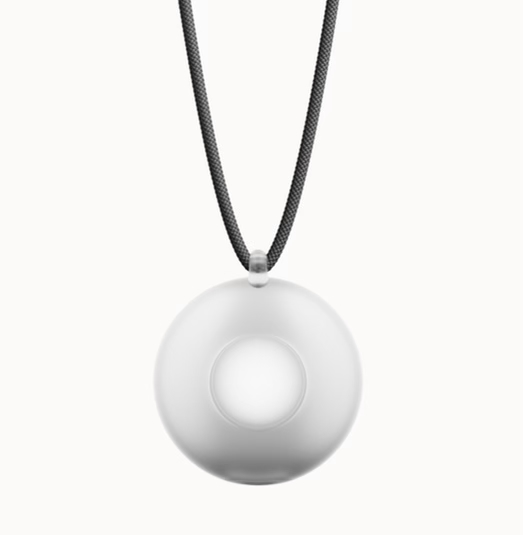
Friend, the AI-powered wearable that was originally conceived as a digital companion for lonely people, has received a major overhaul. The device now comes with a built-in speaker and a consistent voice personality, but its price has more than doubled to $249.
The update, announced on Thursday by founder Avi Schiffmann, marks a significant shift from the original design. When Friend first launched two years ago, it cost $99 and could only send text messages to the user. The new version, which Schiffmann called “friend 2.0” on X (formerly Twitter), can hold spoken conversations.
A promotional video released alongside the announcement shows a woman discussing her ex-girlfriend with the wearable. “It’s not bad to be gay,” the necklace responds. Another clip features a man on a hillside talking about his filmmaking ambitions. “That last film you made was insane!” the device says.
The product’s intended role remains vague. Schiffmann himself described it as “some kind of confidant, friend, God, not really sure what it is” in a recent post. He explicitly ruled out calling it an assistant or a lover. The marketing, however, leans heavily into the idea of an always-available, non-judgmental listener — a pocket-sized deity that only exists to affirm the wearer.
What Friend 2.0 actually does
The core function has not changed. Friend is a small, necklace-worn device that listens to the user’s environment and periodically initiates conversations. It does not replace a smartphone or perform tasks like setting reminders or answering queries. Instead, it is designed to be a persistent companion that comments on the user’s life, offers encouragement, and engages in casual chat.
The new voice feature adds a layer of intimacy. Instead of reading text messages on a phone, users can now hear the device speak directly. Schiffmann has emphasised that the voice is intended to be consistent and unique, giving the AI a identifiable personality over time. Whether that personality is helpful, creepy, or simply odd will depend on the individual user.
Price jump and market positioning
The most concrete change is the price. At $249, Friend now costs more than twice its original $99. That puts it in direct competition with other AI hardware experiments, even if the product category barely exists. The closest comparable device, Humane’s AI Pin, attempted to replace the smartphone entirely and failed within a year.
Friend, by contrast, never promised to replace anything. It was always pitched as a niche emotional accessory. The price increase may reflect the cost of adding a speaker and a more sophisticated voice model, but it also raises the question of whether enough people will pay $249 for an AI that mostly says nice things.
| Aspect | Original Friend (2024) | Friend 2.0 (2026) |
|---|---|---|
| Price | $99 | $249 |
| Output | Text messages | Spoken voice |
| Personality | Implied | Explicit, consistent |
| Market reception | Defaced billboards, curiosity | Unclear |
Broader AI wearable landscape
The AI wearable market has not taken off in any meaningful way. Humane’s shutdown was a high-profile failure. Rabbit’s R1 device, another AI gadget, has struggled to maintain relevance. Apple’s Vision Pro, while not a wearable in the same sense, has seen tepid consumer adoption. The only AI hardware that has found a real audience is the Ray-Ban Meta smart glasses, which succeeded largely because they look like normal glasses and integrate with existing platforms.
Friend’s approach is different. It does not try to be useful. It tries to be present. That may be a harder sell in a market that already offers free AI chatbots on smartphones. Schiffmann’s previous subway billboard campaign in New York became a viral joke after the ads were repeatedly defaced by people who objected to the idea of replacing human connection with a digital pendant.
What this means for Indian readers
India’s AI wearables market is still nascent, and most of the devices discussed remain unavailable or unaffordable domestically. However, the Friend 2.0 update is relevant for Indian tech watchers because it signals a continuing trend: AI companies are trying to create products that serve emotional, not just functional, needs. The same approach could influence how Indian startups design AI companions for local languages, mental health support, or elderly care.
Schiffmann’s refusal to define the product clearly — calling it “a confidant, friend, God” — may sound like marketing fluff, but it reflects a genuine uncertainty about what people actually want from an AI that lives on their body. For now, Friend 2.0 is a talking pendant that costs $249 and exists mostly as a curiosity. Whether it becomes more than that will depend on whether the voice manages to convince enough users that a plastic necklace is worth talking to.
Source: TechCrunch — Friend, the lonely AI wearable, returns with a new voice and a much bigger price tag. https://techcrunch.com/2026/07/30/friend-the-lonely-ai-wearable-returns-with-a-new-voice-and-a-much-bigger-price-tag/