
Source-led article
Travis Kalanick’s Atoms Eyes Robotaxi Business After $1.7B Raise
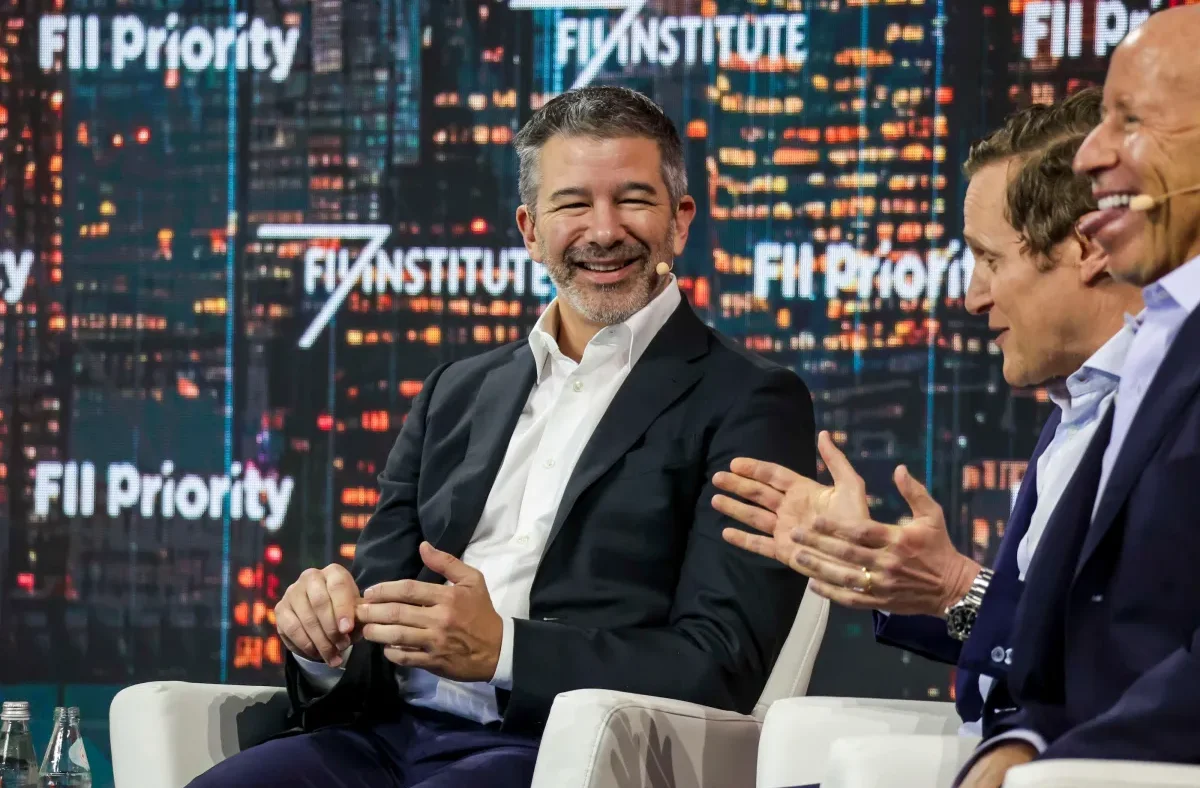
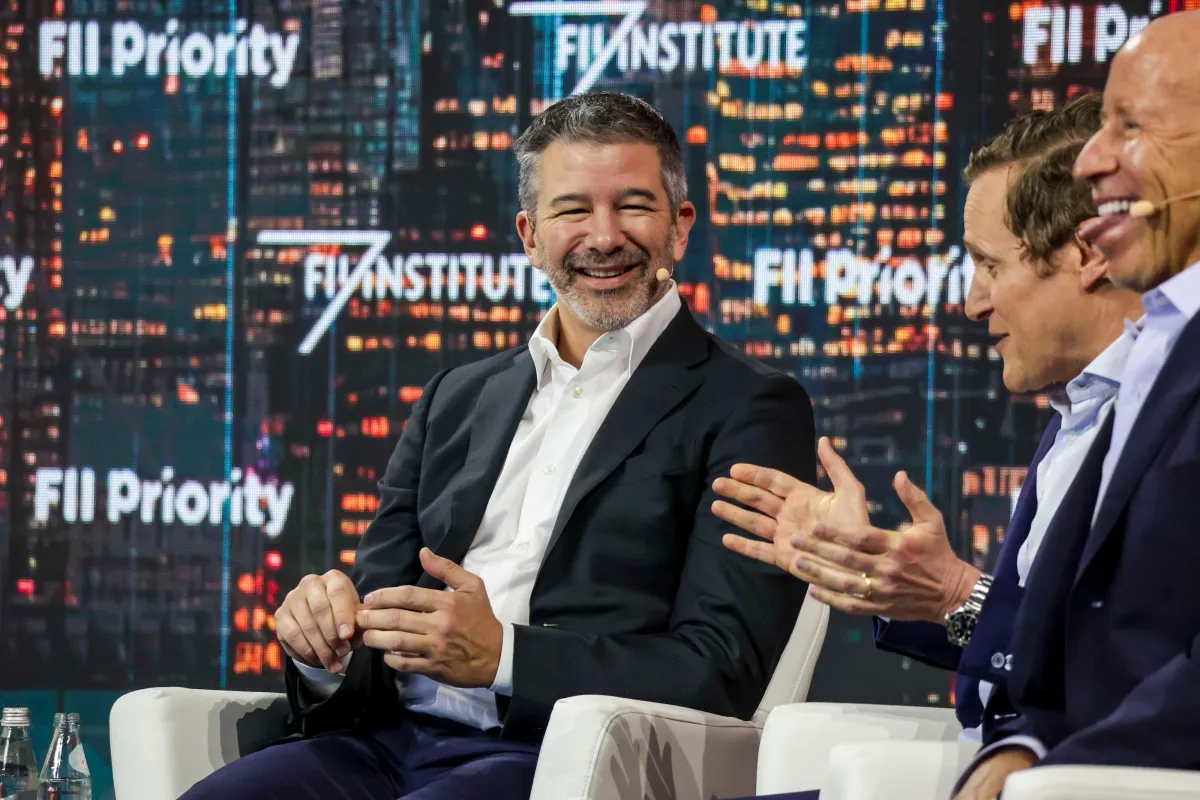
Travis Kalanick, the co-founder of Uber, appears to be circling back to the ride-hailing industry he helped define. His current venture, a startup called Atoms, is reportedly preparing a major push into the autonomous vehicle sector, with plans that could make it a significant player in the robotaxi business.
The development comes just months after Atoms announced a massive $1.7 billion funding round led by venture capital firm Andreessen Horowitz. At the time, Kalanick remained vague about the company’s specific ambitions, describing the round simply as “unfinished business.” A new report from the Financial Times now provides the clearest picture yet of what that business might be.
What Atoms is planning
According to the Financial Times report, Atoms is gearing up for a substantial hiring spree and a series of acquisitions aimed at building out autonomous vehicle technology. The startup has reportedly held discussions with Uber about how the ride-hailing giant could integrate Atoms’ robotaxi technology into its platform.
Uber has already invested $100 million in Atoms, a figure previously confirmed by TechCrunch. This investment places Uber as both a potential partner and a financial stakeholder in Kalanick’s new company. Uber has been aggressively partnering with a wide range of autonomous vehicle companies, including Waymo, Aurora, and Motional, as it seeks to offer self-driving rides through its app without building the technology itself.
The robotaxi angle fits neatly with Kalanick’s public hints. When announcing the $1.7 billion round, he described it as “unfinished business,” a phrase that many interpreted as a reference to his unfinished work at Uber, where he was ousted as CEO in 2017 amid a series of corporate scandals. Building a robotaxi network was a long-stated goal during his tenure at Uber, but the company never achieved a large-scale commercial deployment of self-driving cars under his leadership.
The Pronto acquisition and Anthony Levandowski
Atoms has already made one notable acquisition that points in this direction. Earlier this year, the startup acquired Pronto, an autonomous mining truck startup led by Anthony Levandowski. Levandowski was a key figure in Uber’s early self-driving efforts before a bitter legal battle with Google’s Waymo.
Levandowski was convicted of stealing trade secrets from Waymo and sentenced to 18 months in prison. He was later pardoned by then-President Donald Trump. His return to the autonomous vehicle space through Atoms adds a controversial but technically experienced figure to Kalanick’s team.
The Pronto acquisition gives Atoms immediate access to autonomous driving expertise and technology developed for off-road industrial applications. While mining trucks operate in a very different environment than city streets, the underlying sensor fusion, perception, and control systems share core technical principles with robotaxi technology.
Datos clave
| Detail | Information |
|---|---|
| Company | Atoms (founded by Travis Kalanick) |
| Latest funding | $1.7 billion led by Andreessen Horowitz |
| Uber investment | $100 million |
| Key acquisition | Pronto (autonomous mining startup) |
| Reported plan | Hiring spree, acquisitions, robotaxi technology |
What this means for the Indian market
For Indian readers and the broader tech ecosystem, Kalanick’s move into robotaxis signals that the autonomous vehicle race is far from settled. While most attention has focused on Waymo, Cruise, and Tesla, a well-funded entrant with deep ride-hailing experience could accelerate the timeline for commercial robotaxi services.
India’s own mobility landscape is watching these developments closely. Companies like Ola have explored electric and autonomous vehicle programs, while the Indian government has been cautious about allowing fully autonomous vehicles on public roads. The regulatory environment in India remains a significant barrier, with no clear framework for testing or deploying Level 4 or Level 5 autonomous vehicles.
However, if Atoms succeeds in deploying robotaxis in markets like the United States, it could create pressure on Indian regulators and ride-hailing firms to accelerate their own autonomous vehicle plans. The technology developed by Atoms could also eventually be adapted for Indian road conditions, though that remains a distant prospect given the complexity of Indian traffic.
What remains unclear
The Financial Times report emphasized that robotaxis do not represent the entirety of Atoms’ plans. The company may have multiple product lines or business models in development. Kalanick has not publicly confirmed the robotaxi direction, and Atoms has not issued an official statement about its strategy.
It is also unclear whether Atoms intends to manufacture its own vehicles, partner with existing automakers, or license its technology to other operators. The discussions with Uber suggest a potential partnership model, but Atoms could also choose to operate its own fleet directly in select cities.
The autonomous vehicle industry has a long history of ambitious promises followed by delays and technical setbacks. Waymo, widely considered the leader, operates commercial robotaxi services in only a handful of US cities. Cruise faced a major setback in 2023 when California regulators suspended its permit after a pedestrian injury incident. Tesla has repeatedly promised full self-driving capabilities that have yet to materialize at scale.
Kalanick’s Atoms enters this landscape with significant capital, a controversial but experienced team, and a founder who knows the ride-hailing business intimately. Whether that combination is enough to overcome the enormous technical, regulatory, and operational challenges of robotaxis remains to be seen.