Source-led article
AI’s Evolution from Chatbot to Colleague: The Shift to Task Completion in Persistent Workspaces

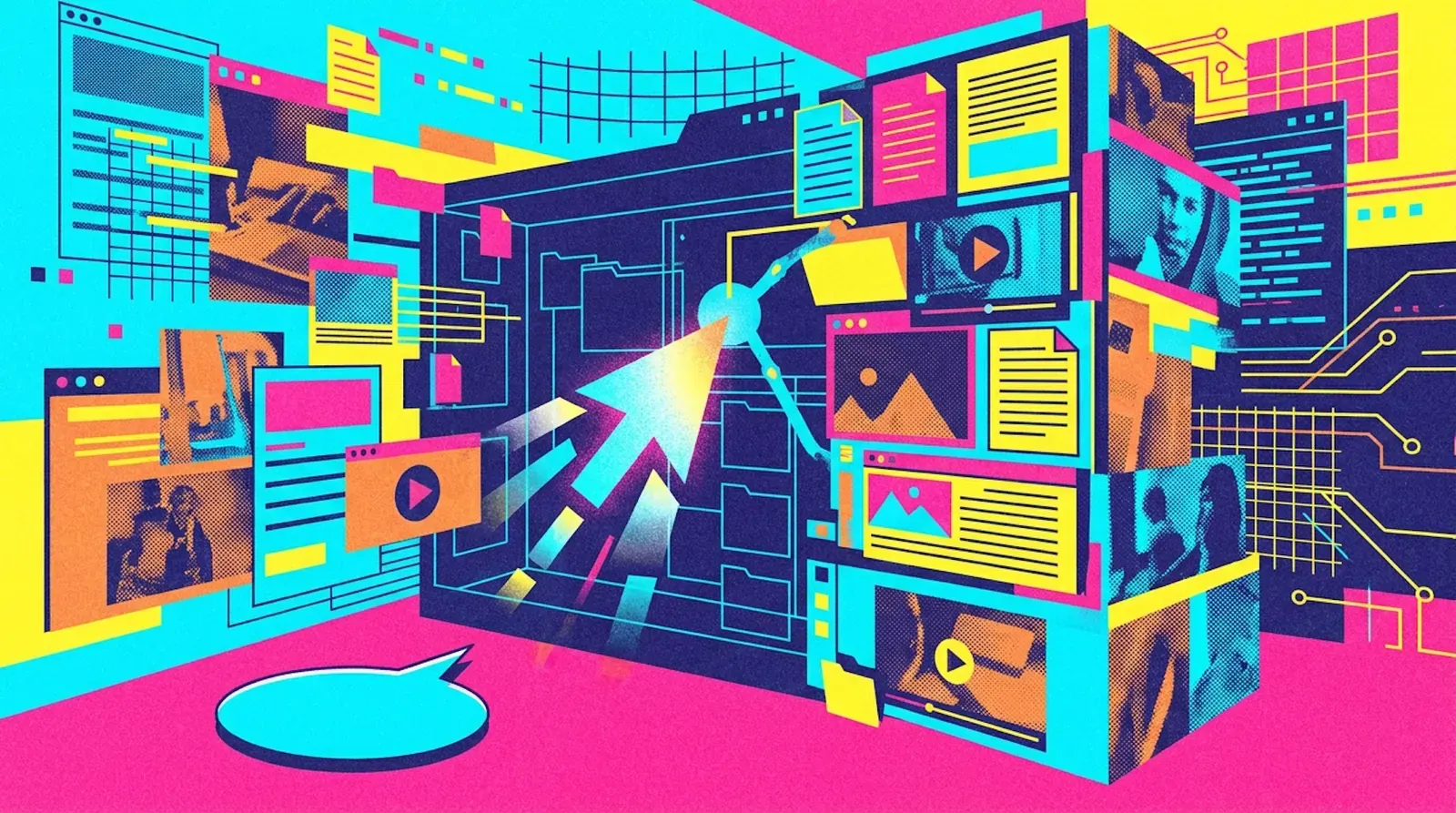
Artificial intelligence is undergoing a significant transformation, moving beyond its role as a conversational agent to become a true “digital colleague.” This evolution, detailed in a recent survey paper by Tencent’s Youtu Lab and several Chinese universities, emphasizes that AI systems will only become reliable co-workers when they can finish entire tasks within persistent work environments, rather than just providing answers. The core idea revolves around combining persistent workspaces with reusable skills.
The research maps this shift from “chatbot to digital colleague” by focusing on two key dimensions: the cognitive core of AI and tool-assisted task execution. The central question for developers is no longer how to produce a better answer, but how to reliably translate intent into finished work. This marks a fundamental change from reactive Q&A to delegated task execution, impacting how AI is developed, evaluated, and deployed.
From Chatbots to Thinking LLMs
The initial “chatbot era” saw models rapidly generating text, drawing on stored language patterns and facts to produce answers in a single pass. These systems typically followed the most likely continuation without self-correction or checking intermediate steps. However, the emergence of “thinking-LLMs,” such as OpenAI’s o1 and Deepseek-R1, introduced more computational power into the answering process. These models generate lengthy “chains of thought,” check intermediate steps, and learn through reinforcement learning to search and self-correct, rewarding only verifiably correct solutions.
This transition is framed by researchers as a shift from fast, intuitive “System 1” thinking to slow, deliberate “System 2” reasoning, borrowing from psychologist Daniel Kahneman’s framework. While first-generation agents could use APIs, write code, and browse the web, they often proved fragile due to fragmented environmental perception, ephemeral tool calls, and a tendency to break with unexpected behavior, rarely completing tasks end-to-end.
The OpenClaw Era: Persistent Environments and Reusable Skills
The “OpenClaw era” represents a crucial advancement where the environment itself becomes persistent. This means files, sessions, logs, browsers, permissions, and skills all endure throughout the workflow. Projects like OpenHands and SWE-agent exemplify this by embedding agents within controlled development environments. The paper argues that the real performance leap comes from combining a persistent workspace with integrated skills.
A workspace provides the necessary state, storage, and consequences for an AI, while a “skill” encapsulates operational knowledge into reusable modules. Anthropic’s Agent Skills, for instance, formalize this through folders containing a SKILL.md file with instructions, scripts, and resources. These skills are distinct from simple prompts or traditional tools; they act as an intermediary layer between the model’s reasoning and its execution within the workspace, allowing organizations to capture know-how in a modular, testable, and portable format. However, the authors caution that reusable procedures can become outdated, overfit to specific workflows, or even become security vulnerabilities.
Key facts
| Feature | Chatbot Era | Digital Colleague Era (OpenClaw) |
|---|---|---|
| Primary Goal | Generate answers | Complete entire tasks |
| Environment | Ephemeral | Persistent (files, sessions) |
| Thinking Style | System 1 (fast, intuitive) | System 2 (slow, deliberate) |
| Evaluation Metric | Answer accuracy | Task closure, verifiable end state |
Implications for Training and Evaluation
This shift profoundly impacts how AI systems are trained and evaluated. Chatbots were typically trained on instruction-response pairs and assessed based on the accuracy of their answers. In contrast, workspace-based systems learn from state-action-observation trajectories, and their success is measured by “task closure”—whether the system brings the target environment to a verifiable end state. Benchmarks like SWE-bench, OSWorld, and WebArena now require reproducible starting states, executable tools, trajectory logs, and end-state checks. Early results, such as GPT-4 completing only 14% of WebArena tasks, highlight the complexity of realistic web environments compared to static Q&A scenarios.
Persistent workspaces also introduce new security and data sovereignty challenges. Agents handling credentials, local files, identity tokens, and communication channels expand the potential attack surface. Initiatives like OpenClaw PRISM and ClawGuard are addressing this by establishing permissions, provenance tracking, and audit logs as runtime safeguards. Data sovereignty is equally critical, as workspace agents interact with sensitive repositories, internal documents, and intermediate results that could become future memories, skills, or training data.
The researchers acknowledge that the workspace-plus-skill combination is not a complete solution. Skills can overfit, and workspaces can accumulate stale files and broken artifacts. Reliable deployment demands robust skill lifecycle management, workspace hygiene, permission controls, sandboxing, rollback capabilities, and trajectory-based evaluation. Without proper governance, reuse can lead to new failure modes. A related study by Meta, Stanford, and the University of Illinois Urbana-Champaign also emphasized that an autonomous system’s performance relies more on its surrounding software layer—the “harness” that includes tools, sandboxed execution environments, and verification mechanisms—than on the base model itself.
Source: The Decoder – https://the-decoder.com/ai-wont-become-a-real-coworker-until-it-stops-answering-and-starts-finishing-tasks/