Source-led article
AI Linked to Inflated Student Grades in Writing and Coding Courses, UC Berkeley Study Finds
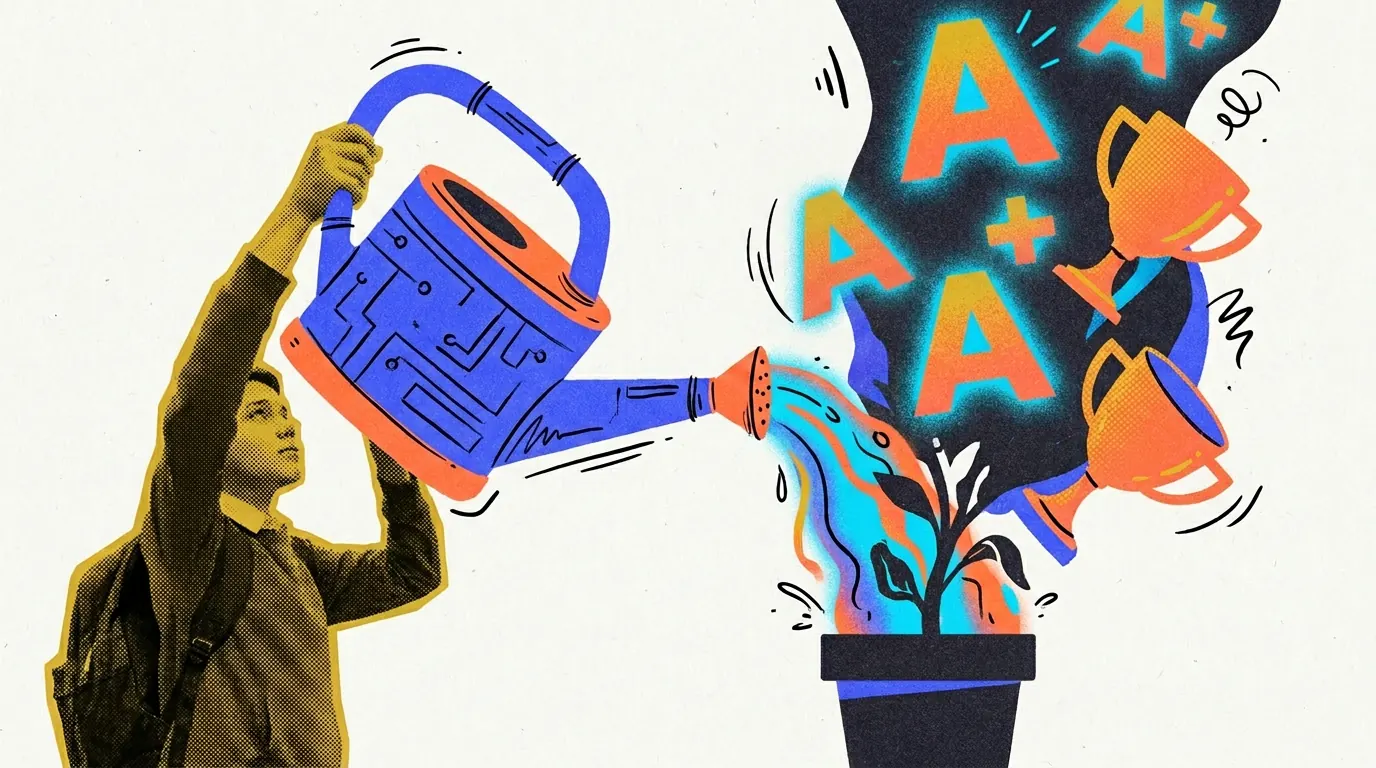
A recent study from UC Berkeley indicates a significant rise in student grades, particularly in university courses heavy on writing and coding assignments, since the launch of ChatGPT. The research, which analyzed over 500,000 grades from a large public research university in Texas, suggests that this grade inflation is more closely tied to students outsourcing their work to AI tools rather than demonstrating improved learning or understanding.
The study, led by Igor Chirikov, tracked grade trends across eight fall semesters (2018-2025) in 319 courses. It found a notable increase in A grades by 13 percentage points after November 2022, when ChatGPT became widely available. This represents approximately a 30 percent jump above the 2022 baseline. The average GPA also rose by 0.12 points, and the grade distribution narrowed, with many A-minus and B-plus grades shifting to straight A’s.
Key findings of the research highlight that the impact of AI is most pronounced in assignments that are unsupervised, such as homework. Chirikov’s analysis differentiated between courses where homework contributed significantly to the final grade and those where proctored exams held more weight. The data showed that in courses where homework constituted more than the median share of the grade, A’s increased by an additional 16 percentage points compared to courses with less homework. This effect was negligible in courses with lower homework weighting, indicating that AI is primarily replacing student effort on unsupervised tasks.
The study also performed a placebo test on oral presentation assignments, where AI’s utility is limited. Grades for these assignments showed no significant change, further supporting the conclusion that AI’s influence is specific to writing and coding tasks.
Why This Matters for Learning
The implications of AI-driven grade inflation extend beyond mere academic metrics. If grades in writing- and coding-intensive courses increasingly reflect AI-generated output rather than genuine student skills, employers and graduate programs could face challenges in making accurate selection decisions. This could lead to a workforce with weaker fundamental skills in areas critical for innovation and development.
Furthermore, Chirikov warns of a potential feedback loop: if AI takes over skill-building tasks during college, graduates might end up less proficient in the very areas where AI is most capable. This scenario could accelerate automation and widen skill gaps in the job market, affecting India’s growing tech and startup ecosystem where strong foundational skills in coding and critical thinking are paramount.
Rethinking Assessment in the AI Era
The study suggests that traditional exam formats may not be sufficient to address this issue. Instead of simply moving to more proctored exams, which can be logistically challenging, a more effective approach might involve redesigning assignments. This could include tasks that either deliberately limit AI use or integrate it thoughtfully, requiring students to document their work process or engage in follow-up interactions to demonstrate their understanding.
OpenAI CEO Sam Altman has also voiced concerns about the education system’s slow response to AI. He had anticipated a period of cheating followed by a systemic overhaul, but observed little meaningful change three and a half years after ChatGPT’s launch. Altman emphasizes that critical thinking skills risk “significant atrophy” if education does not adapt, highlighting the importance of learning skills like writing and coding as essential for mental development.
Key facts
| Aspect | Detail |
|---|---|
| Study Source | UC Berkeley |
| Data Analyzed | Over 500,000 grades from a large Texas research university |
| Key Finding | Significant grade inflation in writing and coding courses post-ChatGPT launch, linked to outsourced work |
| Grade Boost | 13 percentage point increase in A grades, 30% above 2022 baseline |
| Affected Area | Primarily unsupervised homework assignments |
Source: The Decoder, https://the-decoder.com/ai-is-inflating-student-grades-and-the-effect-points-to-outsourced-work-not-better-learning/