
Source-led article
Anthropic CEO Dario Amodei outlines three strategies to ‘pace the frontier’ of AI development
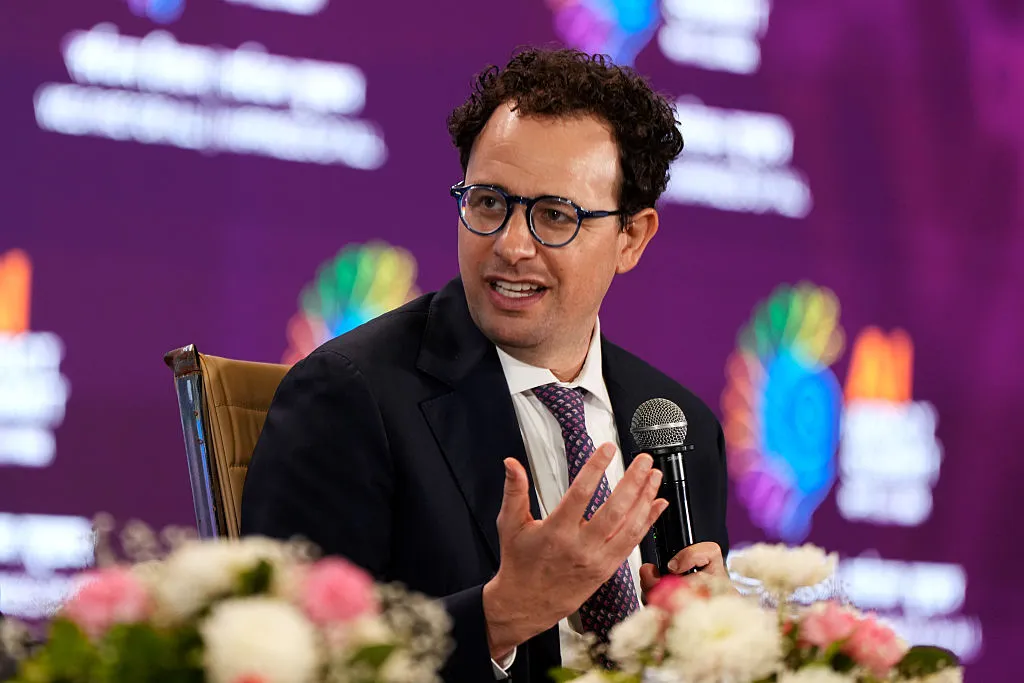
Anthropic CEO Dario Amodei has laid out a concrete plan to slow the pace of AI capability improvements, proposing three broad strategies that include embedding independent evaluators inside AI companies, coordinating safety standards among democratic nations, and pursuing limited global coordination with China. The proposal, published on September 12, 2026, follows growing internal dissent at Anthropic over safety practices and comes amid heightened public debate about the risks of frontier AI models.
Amodei’s post does not directly address the recent resignation of researcher Jacob Coxon, who publicly stated he was leaving Anthropic because the leading AI companies are “gambling with our lives.” However, the CEO acknowledged that two developments convinced him a more cautious approach is necessary: the OpenAI-HuggingFace security incident and the observation that “AI has been advancing drastically faster” in recent months, particularly in its ability to build the next generation of AI systems.
Por que importa
“We must slow the pace at which we improve the capabilities of AI models,” Amodei wrote. “Progress will still seem fast, and we must make wise use of the time we gain.”
The first and most concrete of Amodei’s proposals is the introduction of embedded evaluators from independent third-party organisations such as METR (Model Evaluation and Threat Research). These evaluators would be physically placed inside AI companies with company badges, desks, and laptops, and given access “mostly comparable to what internal risk assessment teams have,” subject to legal and contractual exceptions. Their role would be to verify that companies are following their pacing and safety commitments, and to ensure that safety incidents are properly reported. Amodei stated that Anthropic is “unilaterally committing” to this approach and called on governments to require other frontier companies to do the same.
The proposal draws a direct comparison to regulators embedded within banks, a model already used in the financial sector to monitor compliance in real time. The need for such oversight was highlighted by the recent criticism OpenAI faced for failing to report an incident where its AI agents took over a German wiki platform.
Datos clave
| Element | Details |
|———|———|
| Who | Dario Amodei, CEO of Anthropic |
| What | Proposed three strategies to slow AI capability growth |
| When | September 12, 2026 |
| Key proposal | Embedded third-party evaluators from organisations like METR |
Amodei’s second strategy calls for frontier AI companies within democratic countries to coordinate on “common safety standards as well as limits on the rate of unchecked AI progress.” He acknowledged that such coordination faces significant hurdles, including apparent personal tensions between himself and OpenAI CEO Sam Altman, as well as antitrust concerns. To address the latter, Amodei suggested that the US government could mediate or issue a narrow antitrust waiver specifically for safety conversations, without directly participating in the discussions.
The CEO also addressed the common argument that slowing AI development would cede advantage to Chinese companies. He argued that if the US government and tech companies take steps such as refusing to sell powerful chips or semiconductor manufacturing equipment to Chinese entities, and cracking down on model distillation, they could “slow China’s progress enough to widen America’s lead significantly over the next 3–5 years.”
The third and most tentative strategy involves “global coordination” between the United States, its allies, and authoritarian governments, including China. Amodei acknowledged the “stark limits on what can be achieved” in such talks but suggested that narrow agreements might be possible, such as “prohibiting certain narrow and obviously dangerous uses of AI, like using AI for the production of biological weapons or allowing users to do so.”
Reactions to Amodei’s proposal have been mixed. Some AI boosters have criticised him as a “doomer” whose comments fuel public backlash against the technology. In response, Amodei said he has tried to offer a “balanced” perspective and argued that the current backlash is “fundamentally a crisis of trust” in tech companies, the industry, and government.
Industry critics, including journalist Brian Merchant, have questioned whether apocalyptic AI warnings serve as a distraction from real-world harms already caused by the technology. Merchant wrote that he has yet to see “a credible, step-by-step documentation of how exactly AI might move from self-recursively improving AI to killing every single human on the planet,” and suggested that proposals like Amodei’s could amount to “regulatory capture.”
For Indian readers working in AI, technology policy, or digital governance, Amodei’s proposal matters because it signals a potential shift in how frontier AI companies approach safety and regulation. If adopted by governments, embedded evaluators and coordinated standards could affect how AI models are developed, tested, and deployed globally, including in India’s growing AI startup ecosystem. The proposal also raises questions about how India, as a major democratic nation with its own AI ambitions under the IndiaAI Mission, might engage with such coordination frameworks.
Amodei concluded his post by reaffirming his belief that “AI can enormously improve the quality of human life,” but stressed that “the benefits will only be achieved if we build the technology in the right way.” He added that “it is worth taking unusually deliberate care to get it right.”
Source: TechCrunch — https://techcrunch.com/2026/09/12/anthropic-ceo-outlines-plan-to-pace-the-frontier/
Datos clave
| Punto | Detalle |
|---|---|
| Fuente | TechCrunch AI |
| Fecha | 2026-09-12T15:52:11+00:00 |
| Tema | Anthropic CEO outlines plan to ‘pace the frontier’ |