Source-led article
Founder Uses AI to Navigate Aggressive Cancer Diagnosis and Treatment
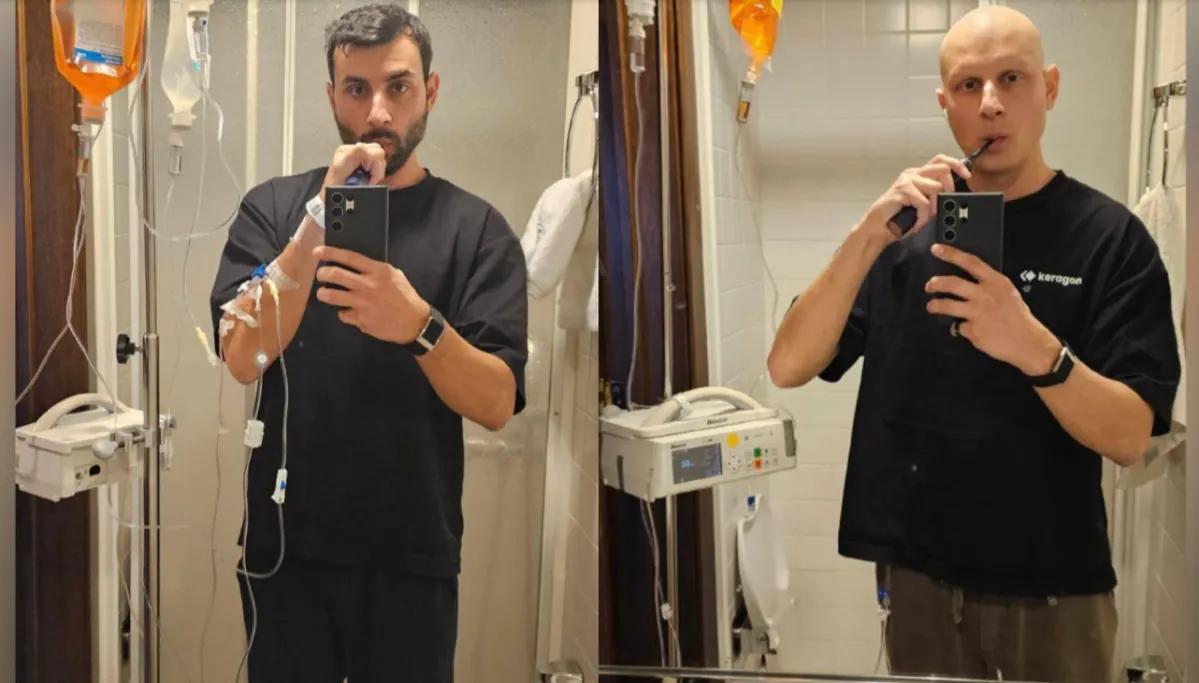
In a compelling example of personalized medicine powered by artificial intelligence, a founder diagnosed with a rare and aggressive form of non-Hodgkin’s lymphoma turned to an AI chatbot to help navigate his treatment path. Connor Christou, known for his meticulous health tracking, fed an extensive array of personal health data into Claude, using the AI to scrutinize medical advice and gain deeper insights into his condition. This approach ultimately led him to question initial diagnoses and avoid potentially unnecessary procedures.
Unexpected Diagnosis and Conflicting Advice
Christou, 35, maintained an optimized health regime, annually tracking nearly 100 biomarkers. Despite a clean bill of health in 2025, an unexpected arm swelling led to the discovery of an 11-by-11-by-8 centimeter mass behind his sternum. A biopsy confirmed aggressive non-Hodgkin’s lymphoma, a rare diagnosis affecting approximately one in 420,000 people. The tumor, which had developed rapidly, was found just weeks before it would have reached stage four.
Initially, Christou received conflicting recommendations from two world-class oncologists. One suggested a lighter chemotherapy regimen with a 60% success rate for his specific presentation, while another advocated for a more aggressive, continuous in-hospital infusion with an 85% success rate. Drawing on his founder’s mindset, Christou sought 12 additional opinions from hematologists and oncologists globally, with eleven out of twelve recommending the harder, more effective path.
Leveraging AI for Data-Driven Decisions
Throughout his six-month chemotherapy, Christou approached his treatment like a business project, meticulously tracking data. He recorded sleep patterns with a Whoop band, maintained a symptom journal via voice transcription, and logged every medication and side effect. Crucially, he fed all this data – blood results, scan data, wearable output, and journal entries – into Claude.
While experts caution against relying solely on general-purpose chatbots for diagnoses due to potential inaccuracies, Christou found that Claude did not replace his doctors but rather empowered him to ask more informed questions. For a condition as rare as his, access to an AI model that had absorbed a vast body of medical literature proved invaluable, offering insights beyond what a standard Google search could provide.
Key facts
| Feature | Detail |
|---|---|
| Patient | Connor Christou, 35, founder of Keragon |
| Diagnosis | Aggressive non-Hodgkin’s lymphoma (rare) |
| AI Tool Used | Claude (AI chatbot) |
| Data Input | Blood results, scan data, wearable output, journal entries |
| Key Outcome | Identified thymus rebound, avoided unnecessary radiotherapy |
Identifying a Critical Diagnostic Nuance
The AI’s most significant contribution came at the end of his treatment. Christou’s final PET scan, used to detect active disease, yielded ambiguous results. His oncologist began discussing a second line of therapy, potentially radiotherapy near his heart and lungs. This alarming development prompted Christou to conduct further research. He discovered that for his specific lymphoma, the false-positive rate on end-of-treatment PET scans can be as high as 60%.
He then fed all three of his PET scans and his MRI into Claude. The AI flagged a known but often overlooked phenomenon: in patients under 40 recovering from this type of lymphoma, the thymus gland can reactivate after chemotherapy, mimicking active disease on imaging. Given his age and specific scan characteristics, Claude estimated a 90% probability of this explanation. Subsequent consultations with three more doctors confirmed the AI’s insight: it was thymus rebound, not active disease, and no radiotherapy was needed.
Implications for Indian Healthcare and AI Adoption
This case highlights the transformative potential of AI in personalized healthcare, particularly in regions like India where access to specialized medical opinions can be challenging. For Indian patients, AI tools could offer a supplementary layer of information, helping them understand complex diagnoses, compare treatment options, and prepare informed questions for their healthcare providers. While not a substitute for medical professionals, AI can empower patients, especially those with rare conditions, to engage more critically with their treatment plans and potentially identify overlooked details. It underscores the growing importance of AI in health tech and patient advocacy, aligning with India’s increasing focus on digital health solutions and AI innovation.
Source: TechCrunch AI, https://techcrunch.com/2026/06/27/the-fittest-founder-in-the-room-got-cancer-heres-how-he-used-ai-to-fight-back/