
Source-led article
India’s Role in Training Physical AI Raises Ethical and Data Privacy Questions
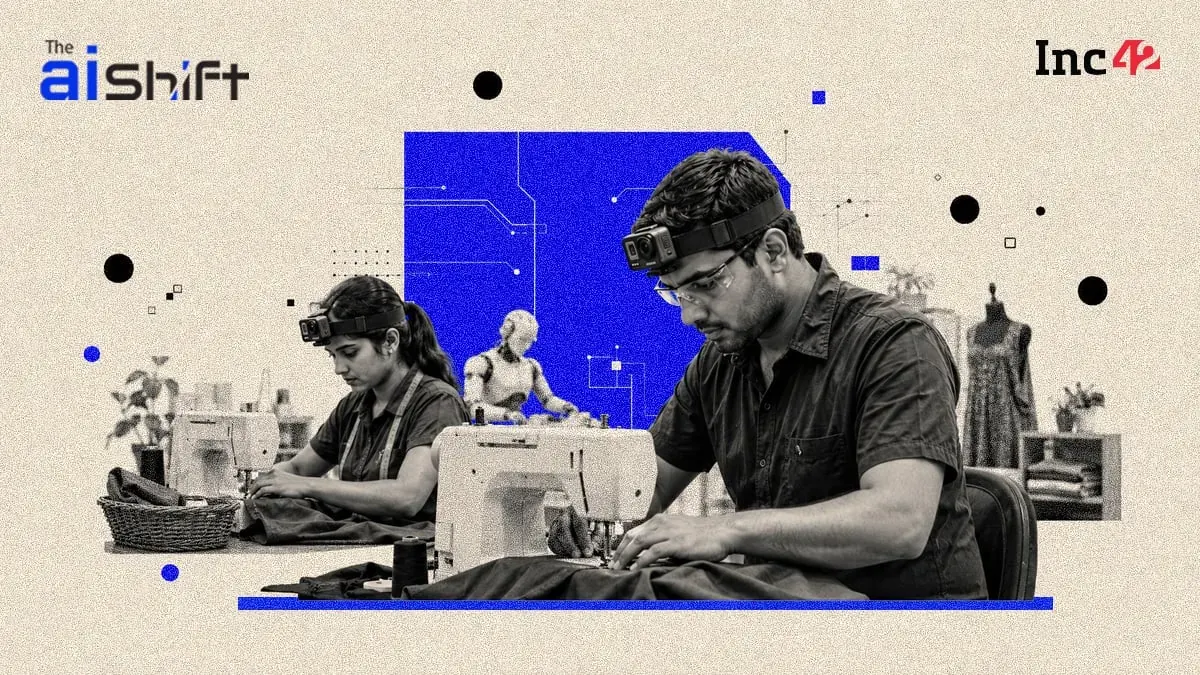
India is rapidly emerging as a foundational ground for training physical AI, supplying the critical human movement data that teaches robots to perform human-like tasks. This development, reminiscent of India’s role in medical transcription in the 1990s, now sees workers wearing head-mounted cameras to record intricate movements for global robotics labs. However, this burgeoning industry is raising serious ethical and data privacy questions, particularly concerning worker consent and the potential for exploitation.
The core of this new industry lies in “egocentric data” collection. Startups like Egolab.AI are equipping blue-collar workers in sectors like textile manufacturing and logistics with body-worn cameras. These devices capture first-person point-of-view footage, detailing every wrist angle, grip, and micro-correction during tasks. This data is then used to train AI models for physical robots, offering a more cost-effective and realistic alternative to synthetic simulations or teleoperation.
The demand for this data is significant. Robotics has long been hampered by a lack of real-world training data, unlike large language models which benefited from vast internet datasets. Egocentric video data provides a solution, enabling the development of foundation models for physical AI. Indian startups such as Awign, Objectways, Humyn Labs, Neo Cambrian, and Human Archive are building pipelines to meet this demand, with companies like Scale AI acting as major buyers.
Ethical and Data Privacy Concerns
Despite the economic opportunity, the model presents troubling ethical dilemmas. Workers, often earning as little as ₹400 daily for wearing cameras, have their movements meticulously recorded. This data, once annotated, is sold to global labs for significantly higher rates, with raw footage fetching lower prices and fully annotated multimodal data commanding up to $50 per hour. The financial benefits flow disproportionately upwards, with factories receiving a modest hourly fee per worker deployment.
A significant point of contention arose in April 2026 when video clips of textile workers in Delhi NCR wearing head-mounted cameras went viral. It was later revealed that these cameras were used for productivity benchmarking, comparing worker performance across different factories. This transforms the camera into a management surveillance tool, blurring the lines between data collection for AI training and worker monitoring.
Legal interpretations of India’s DPDP Act 2023 are also being tested. While the Act allows employers to process worker data for “employment purposes” without explicit consent, legal experts argue that using body-worn cameras for cross-factory performance benchmarking stretches this exemption beyond its intended scope.
Beyond the workplace, the issue extends to third parties. When a delivery person or domestic worker wearing a camera interacts with customers or enters private homes, individuals who have not consented to or even been informed about the recording are captured. This raises questions about privacy in public and private spaces, as current regulations often require explicit notice for surveillance.
Key facts:
| Aspect | Detail |
|---|---|
| Data Type | Egocentric human action data (first-person POV video) |
| Purpose | Training physical AI and robotics foundation models |
| Collection Method | Workers wear head-mounted cameras |
| Ethical Concerns | Worker exploitation, disproportionate compensation, data privacy, consent, potential for surveillance and productivity benchmarking |
Impact on Coruja Readers
For Coruja’s Indian readership, particularly those interested in AI, startups, and digital marketing, this development highlights the complex intersection of technological advancement with socio-economic and ethical considerations. While India positions itself as a global leader in AI training data, understanding the human cost and regulatory implications is crucial. Startups in this space must navigate not only technological challenges but also evolving data privacy laws and ethical responsibilities to workers. The debate underscores the need for clear guidelines from bodies like MeitY and CERT-In to ensure that India’s contribution to global AI development is both innovative and equitable.