
Source-led article
Musk’s SpaceX Foundry Could Speed Up Gas Turbines for AI Data Centres, Raising Pollution Concerns
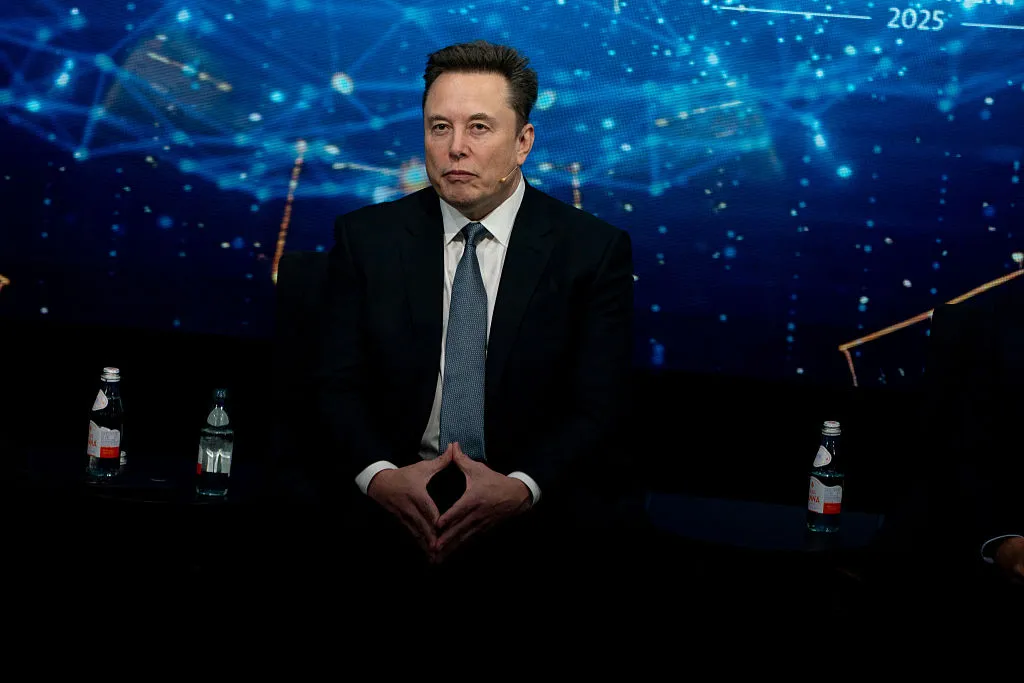
Elon Musk has confirmed that SpaceX is building a secretive foundry in Bastrop, Texas, to cast its own gas turbine blades, a move that could cut the time to bring new gas-fired power plants online for AI data centres by up to 18 months. The announcement, made on X on Saturday, comes as the AI industry faces a growing power crunch, but it also reignites a debate over the health and environmental costs of relying on natural gas to fuel the data centre boom.
The foundry, first reported by The Information, is designed to produce the complex blades and vanes used inside gas turbines. According to Musk, the inability to cast these components at scale is the single biggest bottleneck in gas turbine production. Currently, only four companies worldwide have mastered the process, and all are operating at full capacity through 2030.
What the foundry aims to solve
The blades inside a gas turbine’s hottest section operate at temperatures between 3,000 and 3,600 degrees Fahrenheit — roughly 800 degrees hotter than the melting point of the metal alloy they are made from. This is achieved through internal cooling channels, thermal-barrier coatings, and a specialised casting process that grows each blade as a single, unbroken crystal inside a vacuum furnace. Even microscopic seams can cause cracking under stress.
For jet engines, the blades are smaller. For power-plant turbines, they are significantly larger, making defect-free production far more difficult. SpaceX’s in-house capability would give Musk-controlled entities a manufacturing advantage that most well-funded competitors cannot easily replicate.
Why this matters for AI infrastructure
The International Energy Agency projects that global data centre electricity use will roughly double by 2030. Gas turbine maker GE Vernova has said it is essentially sold out of production capacity through 2030, largely due to AI infrastructure demand. Hyperscalers including Amazon, Google, Meta, OpenAI, and Microsoft have all turned to building private gas-fired plants next to data centres as a faster alternative to waiting on grid upgrades.
Musk’s own AI venture, xAI, operates the Colossus data centre in Memphis, Tennessee, which already runs on gas turbines. By bringing turbine blade casting in-house, Musk aims to accelerate deployment of similar plants for xAI and potentially other Musk-affiliated projects, including Tesla and SpaceX.
Datos clave
| Aspect | Details |
|---|---|
| Location | Bastrop, Texas, near existing Starlink factory |
| Land acquired | ~830 acres between March and June 2026 |
| Expected lead time reduction | Up to 18 months for new gas turbines |
| Current global suppliers | 4 companies, all at full capacity through 2030 |
Pollution and legal challenges already mounting
The push for faster gas turbines comes as communities and regulators raise alarms about the pollution they emit. In Memphis, the NAACP has repeatedly accused SpaceXAI of operating turbines without required federal permits or pollution controls. The organisation points to emissions of smog-forming compounds and hazardous chemicals like formaldehyde, which are linked to asthma, respiratory disease, and certain cancers. The site sits near neighbourhoods that already face heavy industrial pollution, and University of Memphis researchers found that air pollution grew “slightly worse” after the data centre began operations.
In Virginia’s “Data Center Alley,” a study commissioned by the Piedmont Environmental Council used the EPA’s COBRA health-impact model to estimate that emissions from a single facility’s eight full-time gas turbines could affect more than 2.5 million people across multiple counties. The heaviest impact would fall on already-marginalised communities, with an estimated 3.4 to 6.5 additional premature deaths per year, translating to $53 million to $99 million in annual health-related damages.
Federal lawsuits are also pending, and similar complaints have emerged in other regions where gas turbines have become the default fix for data centre power shortages.
What this means for Indian readers and the AI sector
India’s own data centre capacity is expanding rapidly, with major investments in Mumbai, Chennai, Hyderabad, and Bengaluru. The country’s power grid already faces strain, and the government’s IndiaAI Mission has flagged energy availability as a key concern. While Musk’s foundry is a US-based development, it signals a global trend: AI infrastructure builders are willing to bypass traditional grid timelines and accept the environmental trade-offs of gas-fired power. For Indian tech and policy watchers, this raises questions about whether similar strategies will emerge here, and what regulatory safeguards may be needed.
The move also highlights the strategic value of manufacturing capabilities in the AI supply chain. Control over a scarce component like turbine blades could reshape competitive dynamics among hyperscalers, a lesson that Indian manufacturers and startups may want to note.
Source: TechCrunch — Musk’s faster path to more gas turbines comes with pollution problem (https://techcrunch.com/2026/08/30/musks-faster-path-to-more-gas-turbines-comes-with-pollution-problem/)