
Source-led article
Austria Proposes Luring Anthropic to EU Amid US AI Restrictions
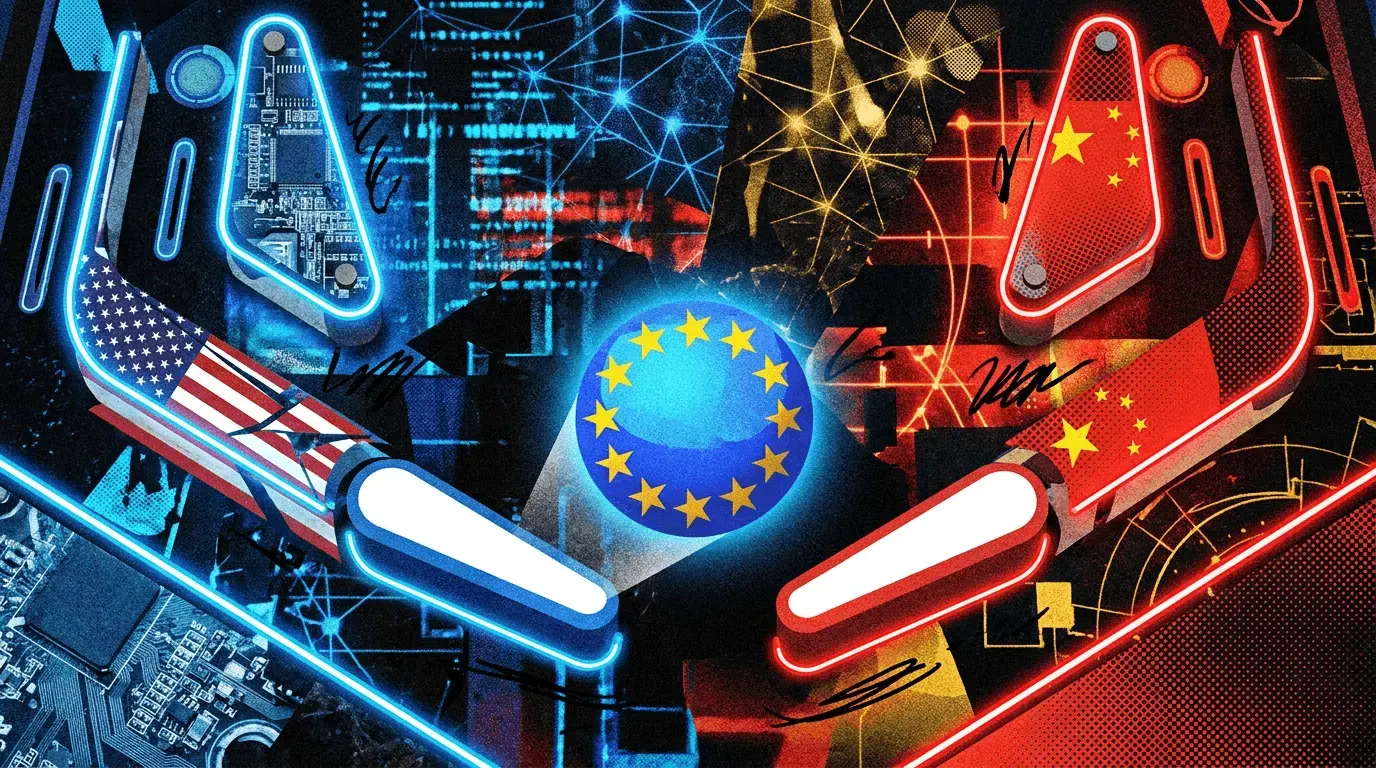
The European Union is grappling with its reliance on foreign advanced artificial intelligence technologies, a concern amplified by recent US government decisions to restrict or delay access to cutting-edge AI models for non-US users. In response, Austria’s State Secretary for Digitalization, Alexander Pröll, has proposed a bold strategy: actively pursuing and attracting leading AI developer Anthropic to establish a stronger presence in Europe.
This initiative stems from a letter Pröll sent to EU Commissioner for Technological Sovereignty Henna Virkkunen. In his correspondence, Pröll highlights the immediate impact of US policies, stating that the EU’s single market, comprising 450 million people, was “cut off from cutting-edge innovation overnight.” He argues that relying on a technology one does not produce and can only use with permission constitutes a dangerous dependency rather than a useful tool.
The Call for European AI Sovereignty
Pröll’s argument centers on fostering European technological sovereignty in AI. He asserts that by offering legal certainty, market access, and capital rooted in European values, the EU could provide an attractive environment for companies like Anthropic. He specifically points to Anthropic’s corporate philosophy, which he believes priorites ethical AI use and safety over speed, aligning well with European regulatory and ethical frameworks for AI development.
Key facts:
| Aspect | Detail |
| :———— | :———————————————————————- |
| Initiator | Alexander Pröll, Austria’s State Secretary for Digitalization |
| Target | Anthropic (AI developer) |
| Reason | US restrictions on advanced AI models for foreign users |
| Goal | Enhance EU AI independence and technological sovereignty |
Challenges and Realities of the Proposal
While the proposal underlines a strategic imperative for Europe, its immediate feasibility is uncertain. The letter primarily calls for a review, and the European Commission’s direct action on such a specific recruitment drive is considered unlikely by observers. Analysts note that Europe’s current dependency on external digital technologies is a culmination of two decades of policy choices, not merely recent events.
Moreover, Anthropic’s deep ties to the US, including its reported use by the NSA and its strong patriotic stance, particularly evident in past disputes regarding AI deployments, suggest that a full relocation might be challenging. Despite this, the US market alone may not suffice to fund the massive training runs and data center buildouts required by leading AI firms. This financial reality could offer Europe some leverage in negotiations for partnerships or expanded presence.
The China Alternative and Its Implications
The discussion also includes a potential alternative: the adoption of Chinese AI models. AI investor Xiaoyin Qu suggests that European (and even US) companies might consider Chinese AI to reduce reliance on OpenAI and Anthropic, citing the ability to host models on their own GPUs and fine-tune them. However, this scenario merely trades one dependency for another, shifting reliance from Washington to Beijing.
Experts caution that while locally run Chinese AI might appear self-sufficient, open-source models could quickly see new licenses or restrictions, or the best models could be withheld. This could undermine Europe’s pursuit of true AI sovereignty. The overarching consensus is that genuine independence for Europe necessitates the development of its own AI capabilities and, crucially, its own robust infrastructure.
This development matters for Coruja’s readers in India because it highlights the global geopolitical dynamics shaping the future of AI. As a major player in the global tech landscape, India also navigates its own path towards AI self-reliance and ethical AI development. Understanding how other regions, like the EU, are responding to external technological dependencies provides valuable insights into potential strategies, challenges, and opportunities in the evolving AI ecosystem. It underscores the importance of national and regional strategies for AI infrastructure and talent development to avoid similar dependencies.
Source: The Decoder, https://the-decoder.com/eu-seeks-ai-independence-as-austria-proposes-luring-anthropic-to-europe/
Datos clave
| Punto | Detalle |
|---|---|
| Fuente | The Decoder |
| Fecha | 2026-06-29T17:58:42+00:00 |
| Tema | EU seeks AI independence as Austria proposes luring Anthropic to Europe |