
Source-led article
Microsoft Research’s Mirage AI Model Boosts Video Generation Efficiency
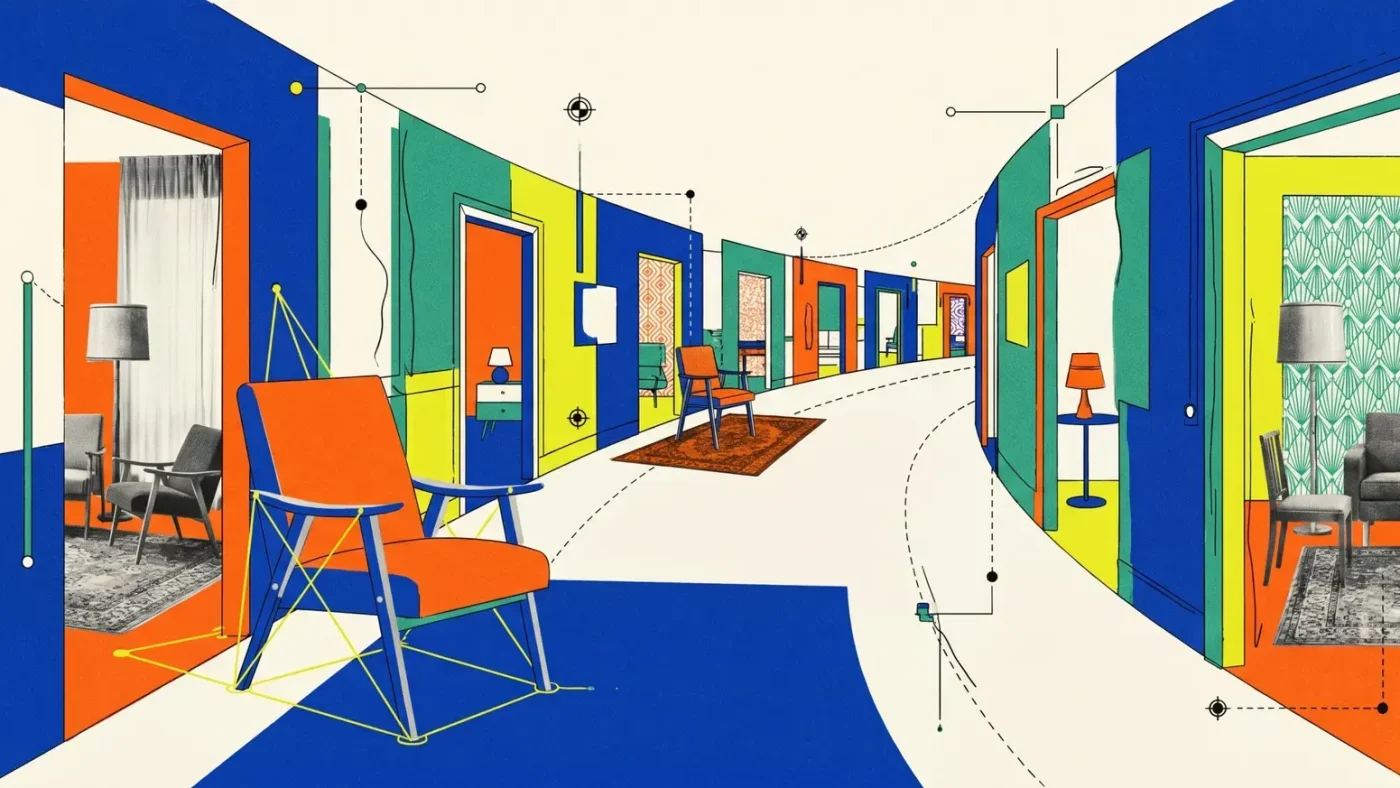
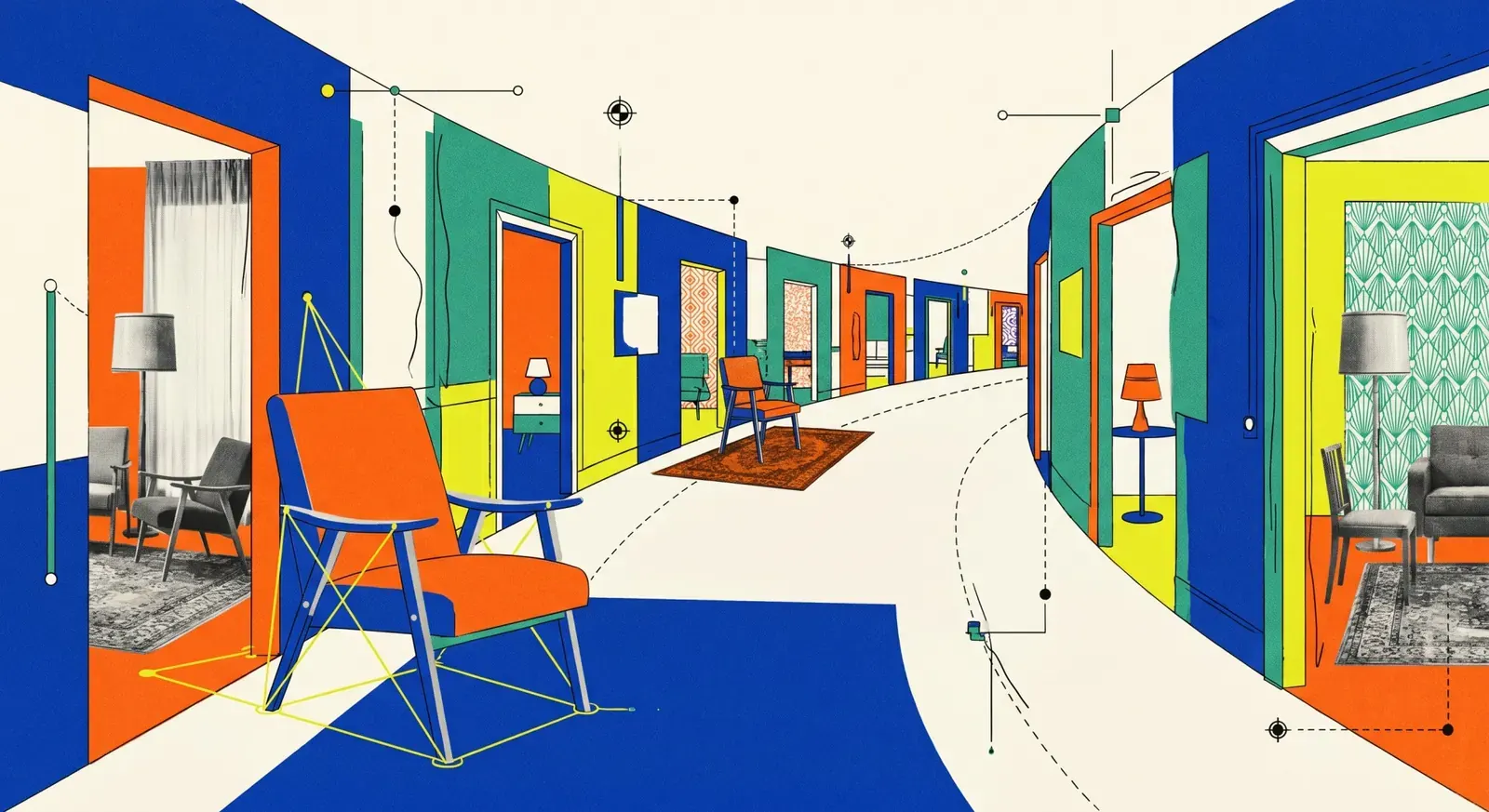
Microsoft Research, in collaboration with various universities, has unveiled “Mirage,” a novel video world model designed to dramatically improve the efficiency and spatial consistency of AI-generated video sequences. Unlike previous methods that rely on pixel-based point clouds, Mirage stores scene information directly within the latent space of the diffusion model, leading to substantial reductions in computational time and graphics memory usage. This innovation is particularly relevant for applications requiring long, coherent video generation, such as simulations and virtual environments.
Addressing Spatial Consistency Challenges
Video world models are crucial for transforming an initial frame and camera path into plausible moving images. However, a persistent challenge in this field has been maintaining spatial consistency – ensuring that elements of a scene remain stable and recognizable even as the camera moves and revisits areas. Earlier systems often struggled with this, leading to artifacts like shifting furniture or changing textures when a camera returned to a previously viewed corner of a room. Existing solutions, such as Voyager, WonderWorld, and Spatia, attempted to address this by using 3D point clouds, which are continuously updated with color data. This approach, however, introduces a “double bottleneck,” as data must be rendered from the point cloud and then re-encoded into the model’s internal feature space, consuming significant compute resources and memory.
Latent Spatial Memory: A New Approach
Mirage tackles this bottleneck by eschewing pixel-based memory. Instead, it stores the internal image features that the diffusion model already utilizes, mapping each feature to a specific 3D spatial location. This creates a “latent spatial memory.” When generating a new viewpoint, Mirage projects this stored memory directly onto the target camera and feeds the result to the generator. This eliminates the need for rendering and re-encoding point clouds, streamlining the process.
This innovative approach not only accelerates generation but also drastically cuts down on memory consumption. The data is maintained at the model’s compact internal resolution rather than full image size. Mirage builds videos in segments, initializing its spatial memory from the starting image. For subsequent segments, it retrieves relevant data from memory, generates new frames, and writes their content back to the cache, allowing the memory to continuously expand. A built-in filter intelligently removes moving objects and sky elements before writing to memory, ensuring that only stable geometry is stored for long-term consistency.
Performance and Efficiency Gains
Mirage was developed by building upon Alibaba’s open-source video model Wan2.2, with an added module to integrate the new memory system and fine-tuning using LoRA adapters. On the WorldScore benchmark, Mirage outperformed its closest competitor, Spatia, which still uses color-based memory. It also significantly outpaced general video generators like Wan2.1 and CogVideoX, demonstrating superior ability in maintaining spatial structure and surface consistency across numerous frames.
The model also showed strong results on the RealEstate10K dataset in a closed-loop test, where the camera returns to its starting point. This rigorous test highlights Mirage’s robustness, as every minor error accumulates over the full path. Mirage’s most compelling advantage is its efficiency. While color-based memory scales poorly with longer runs and demands increasing graphics memory, Mirage’s computational cost per frame remains nearly constant after the initial segment. Researchers report up to 10.57 times faster generation and up to 55 times less memory usage compared to color-based systems.
Key facts:
| Feature | Description |
|---|---|
| Model Name | Mirage |
| Developer | Microsoft Research & various universities |
| Core Innovation | Latent spatial memory, bypassing pixel-based point clouds |
| Key Benefit | Enhanced spatial consistency, up to 10.57x faster generation, 55x less memory |
Future Directions
The researchers acknowledge one current limitation: moving objects are dropped at segment boundaries because their geometry cannot be reliably tracked and are deliberately filtered out. Consequently, busy scenes derive less benefit from spatial memory than static interiors. The team identifies the accurate storage and tracking of dynamic content as the next significant challenge to address.
Video world models represent a rapidly evolving area within AI video research. While models like Veo focus on producing single, internally consistent clips, world models aim to create navigable scenes that remain consistent over extended periods. Recent developments, such as Google Deepmind’s Genie 3 and Google’s Gemini Omni, underscore the growing interest and potential of this technology to create interactive and persistent virtual environments.
Source: The Decoder, https://the-decoder.com/microsoft-researchs-mirage-gives-video-generation-a-persistent-spatial-memory-that-doesnt-forget-whats-around-the-corner/