Source-led article
Google Ads Editor 2.13 Adds AI Max Support for Shopping Campaigns
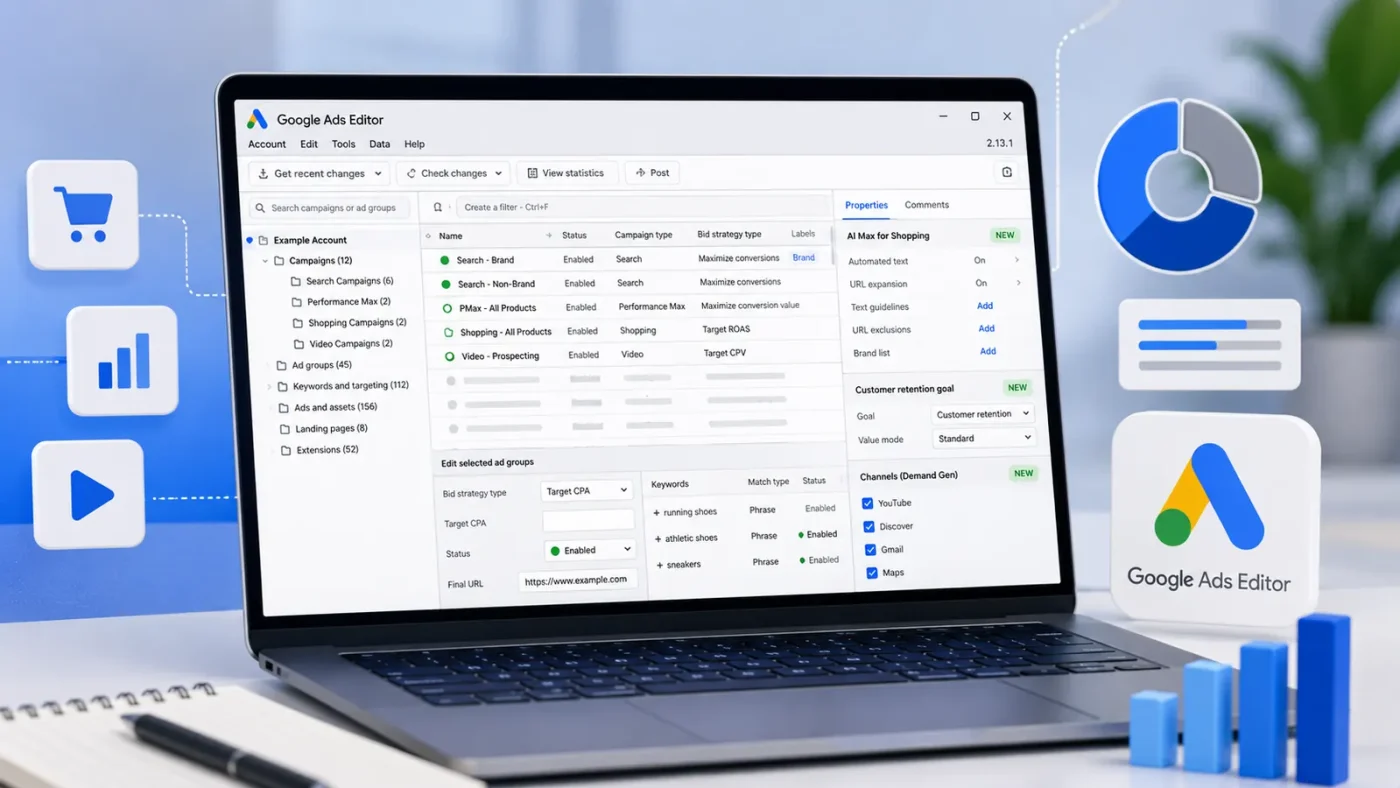
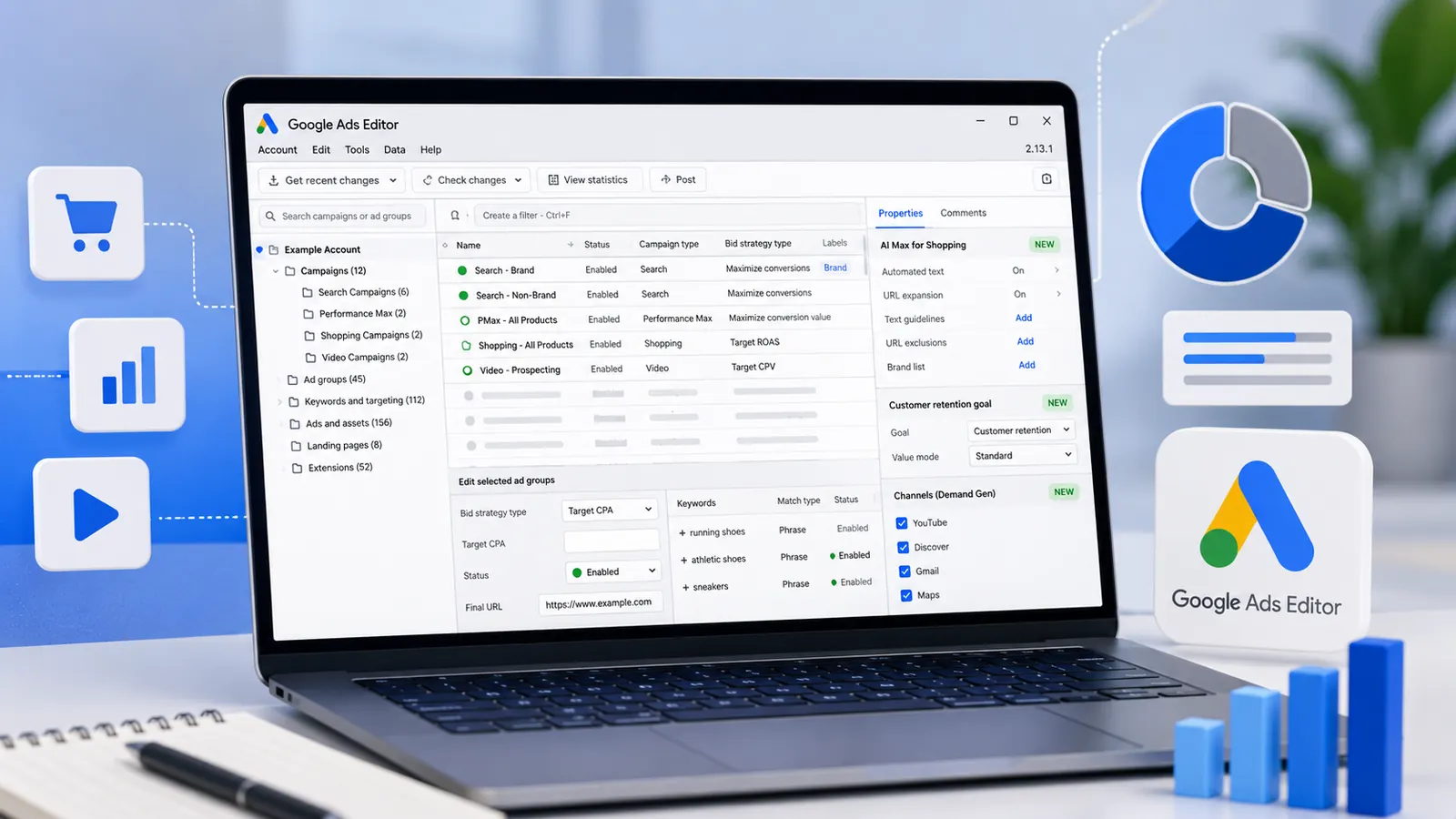
Google has released Google Ads Editor 2.13, bringing AI Max support to Shopping campaigns for the first time. The update also adds Performance Max retention goals, expanded Demand Gen features, and several workflow improvements, according to a company announcement.
The offline campaign management tool now mirrors more of the capabilities available in the web-based Google Ads interface, particularly for AI-powered campaign types. For advertisers managing large accounts or working in teams, the update reduces the need to switch between Editor and the browser.
What’s new in Google Ads Editor 2.13
The new version introduces several features aimed at helping advertisers adopt Google’s latest AI-driven campaign tools. The key additions include:
- AI Max for Shopping campaigns: Advertisers can now enable and configure AI Max bidding and creative optimisation for Shopping campaigns directly within Editor. This brings parity with Search and Performance Max campaigns.
- Performance Max retention goals: New goals for customer retention are available in Performance Max campaigns, allowing advertisers to optimise for repeat purchases or loyalty.
- Expanded Demand Gen features: More settings for Demand Gen campaigns, including audience signals, creative management, and reporting, are now supported.
- Best-practice warnings for video campaigns: Editor now flags potential issues such as missing assets or low-quality creatives before campaign launch.
- Improved column management and resume download support: Users can customise columns more easily and resume interrupted downloads of large accounts.
- Updates to bidding strategy management: Advertisers can now manage more bidding strategies without leaving Editor.
The update also removes support for creating new Video Action campaigns, following Google’s earlier migration of these campaigns to Demand Gen.
Datos clave
| Feature | Details |
|---|---|
| AI Max for Shopping | Full support for AI Max bidding and creative optimisation in Shopping campaigns |
| Performance Max | New retention goals for repeat purchases and loyalty |
| Demand Gen | Expanded audience, creative, and reporting settings |
| Video Action | Creation support removed; migrated to Demand Gen |
Why this matters for PPC advertisers
AI Max for Shopping is the standout feature for advertisers who rely on Google Ads Editor for bulk campaign management. Previously, enabling AI Max for Shopping required switching to the web interface, breaking the offline workflow. With this update, advertisers can now manage AI-powered Shopping campaigns entirely within Editor, saving time and reducing errors.
The addition of Performance Max retention goals is also significant. Advertisers running e-commerce accounts can now optimise for customer lifetime value rather than just first-time purchases. This aligns with broader industry trends toward retention marketing.
For Indian e-commerce and retail advertisers, the ability to manage AI Max Shopping campaigns offline is especially useful. Many agencies and in-house teams handle large product feeds across multiple brands, and Editor’s bulk editing features are essential for scaling campaigns efficiently.
Between the lines
This release is part of Google’s continued effort to bring the full feature set of Google Ads into Editor. As Google pushes more automation and AI into campaign management, Editor is evolving from a simple bulk editing tool into a platform that can handle nearly every major campaign type offline.
The removal of Video Action campaign creation signals Google’s intent to consolidate campaign types. Demand Gen now serves as the primary format for video and display advertising, making it easier for advertisers to manage cross-channel campaigns in one place.
Advertisers who have not yet migrated their Video Action campaigns to Demand Gen should plan to do so, as Google will eventually phase out support for the older format entirely.
What advertisers should check next
PPC managers should update to Google Ads Editor 2.13 and test AI Max for Shopping on a test account before applying it to live campaigns. The new retention goals in Performance Max require careful audience targeting based on past purchase data, so advertisers should review their remarketing lists and conversion tracking.
For Demand Gen, the expanded settings allow more granular control over audience signals and creative. Advertisers running video campaigns should verify that their existing Demand Gen campaigns are using the updated interface and take advantage of the new best-practice warnings.
Source: Search Engine Land – https://searchengineland.com/google-ads-editor-2-13-brings-ai-max-support-to-shopping-campaigns-483506